
 back to list
The list of best selling Shopify products barely changes from year to year. What changes is who reads the demand correctly, prices it for a real margin, and ships it without burning the profit on the way out the door.
Every guide to the best selling products on Shopify runs the same victory lap: t-shirts, supplements, skincare, pet gear. The categories are correct. They are also useless on their own, because a category is not a business. Two sellers can stock the identical product and watch one print money while the other quietly closes the store.
The gap between them comes down to three things. They read demand differently. They price for margin differently. And they handle the boring back half of the order differently. This guide treats all three as the actual work, and treats the product list as what it is: a starting point, not a finish line.
So yes, you will get the categories. Each one is backed by what people are actually searching for and buying right now, with the market data to size the opportunity. But the categories sit inside a method you can reuse to build an online business long after this year’s Shopify trending products have cycled out.
Read demand before you stock anything
Picking what to sell on Shopify by browsing other people’s stores is how you end up selling the same fidget toy as 4,000 other people in month three of its decline. The better move is to read demand at the source, then pressure-test it before a single unit lands in a warehouse.

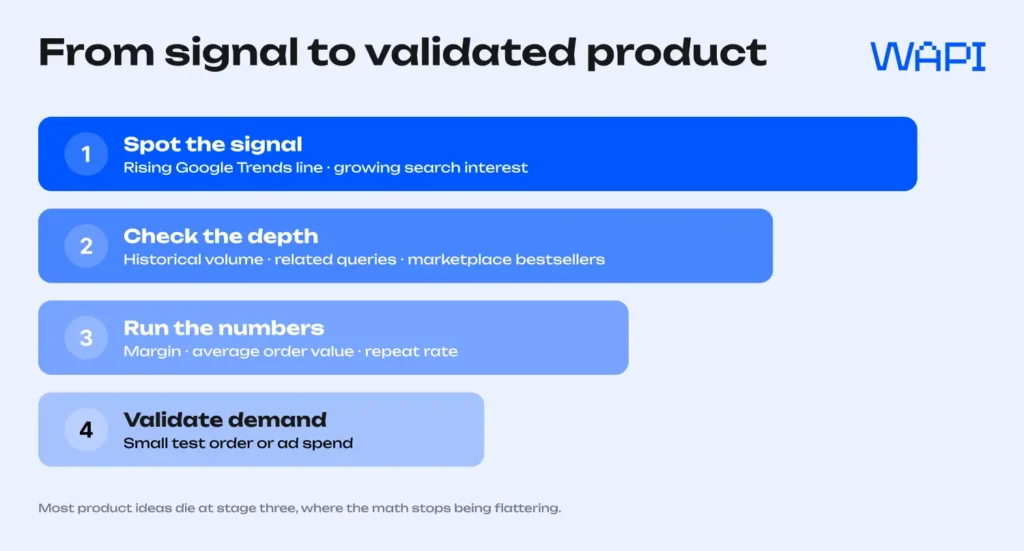
Two free signals do most of the heavy lifting: organic search interest and marketplace bestseller lists. Neither tells you the whole story alone. Together they tell you whether a product has a pulse, and whether that pulse is climbing, flat, or fading.
Google Trends, used the way a buyer would
Google Trends is the cheapest market research you will ever run. Type a product into the tool, read the interest-over-time line, and you learn in ten seconds whether a term is climbing or sliding. The compare feature stacks two ideas against each other. The related queries panel hands you adjacent product ideas you had not thought of.
One caution separates the people who use Google Trends data well from the people who get burned by it. A vertical spike is not a trend. It is a moment. Skincare ingredients and dance-costume fads ride those spikes and crash just as fast. What you want is a line that has climbed steadily over several years, the shape that signals consistent demand rather than a viral blip.
So look past the spike. Pull the five-year view, check whether interest holds through the off-season, and read the related queries for the long-tail terms that show people are actively searching with intent to buy, not just to gawk.
Marketplace bestseller lists
Search interest tells you what people want to know about. Bestseller lists tell you what they actually paid for. Amazon’s Best Sellers pages, eBay’s trending deals, and Etsy’s popular-items sections are live readouts of consumer demand across product categories, refreshed constantly off real sales data.
Read them as a cross-check, not a shopping list. If a product trends on Google and shows up across marketplace bestsellers, you have two independent signals pointing the same way. If it trends on search but no one is buying, you have found curiosity, not a market.
The four-filter test
Before any product idea becomes inventory, run it through four questions. They are unglamorous on purpose.
- Margin. After product cost, shipping, fees, and customer acquisition, is there enough left for a healthy profit margin? Most reference guides put a workable floor around 30 to 50 percent gross before you scale.
- Repeat purchases. Does the product naturally come back, through consumption, refills, or seasonal restocking? Repeat purchases turn a one-time sale into a customer.
- Average order value. Can you bundle or cross-sell to lift the average order value, so each acquisition pays for itself faster?
- Supply. Can you find reliable suppliers who hold quality and ship on time? A bestseller with a flaky supplier is a refund machine.
Key point: A trending product and a profitable product are not the same thing. Search interest gets a shopper to your page. Margin, repeat purchases, and reliable supply decide whether the sale was worth making. And a product that passes the demand test but fails the shipping test is not ready to scale.
The product categories that move in 2026

Here are the categories doing the work this year. None of them is a secret. That is the point: the Shopify best selling products tend to be durable categories with broad, repeating consumer demand, not clever one-offs. Your edge as an online store comes from the angle you take inside the category, not from finding a category no one else has noticed.
Use the table as a map of the section, then read the categories that fit your model.
| Category | Why it sells | Demand shape |
|---|---|---|
| Apparel & T-shirts | Universal need, endless design variation | Consistent, design-led |
| Health & supplements | Wellness spend, built-in refills | Strong, repeating |
| Personal care & beauty | Self-care habit, ingredient stories | Consistent, trend-sensitive |
| Pet supplies & products | Pet humanization, emotional buying | High and resilient |
| Phone & tech accessories | Huge installed device base | Steady, replacement-driven |
| Home & lifestyle | People investing in their spaces | Steady, style-led |
| Home fitness | At-home workout habit held post-2020 | Stable, seasonal peaks |
| Home office equipment | Remote and hybrid work normalized | Steady, upgrade cycle |
| Toys & learning | Gifting plus parental willingness to spend | Seasonal, gift-driven |
Apparel and T-shirts
T-shirts remain one of the most reliable products to sell on Shopify, and Shopify’s own merchant data explains why. The platform puts shirts at the top of its bestseller list, with t-shirts the most popular clothing item of all. Universal demand plus infinite design variation keeps t-shirts among the best selling products in Shopify catalogs year after year, and keeps them in high demand even when fashion moves on.
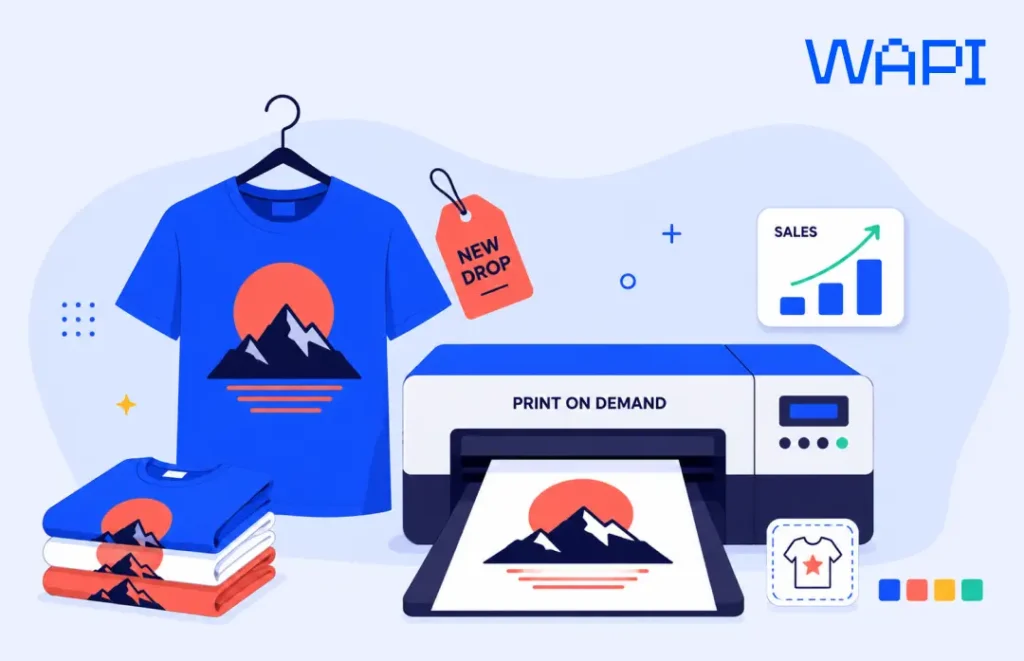
That same ubiquity is the catch. Anyone can sell a blank tee, so the blank tee is worthless. The money lives in the angle: a niche audience, a point of view, a design no one else carries. Print on demand removes the inventory risk while you find that angle, letting you test designs at relatively low costs before committing to a single bulk run.
Athletic apparel sits in the same family and behaves a little differently. Leggings and shorts drive most of the volume, and the category rewards brands that build a community before they build a catalog. The buyers treat the products as personal style statements, not just gym kit, which is exactly why margins hold up.
Our advice: If you are launching with t-shirts, start on print on demand services to validate which designs sell, then move only your proven winners to a bulk order. You keep the upside of low risk and gain the margin of buying volume once demand is real.
Health and wellness supplements
Supplements are one of the strongest categories on the platform, and the macro picture explains why. The category rides a fast-growing global wellness supplements market. Grand View Research valued the dietary supplements market at USD 209.5 billion in 2025 and projects USD 431.7 billion by 2033, a 9.5 percent compound annual growth rate from 2026 to 2033. That is a tide lifting a lot of stores.
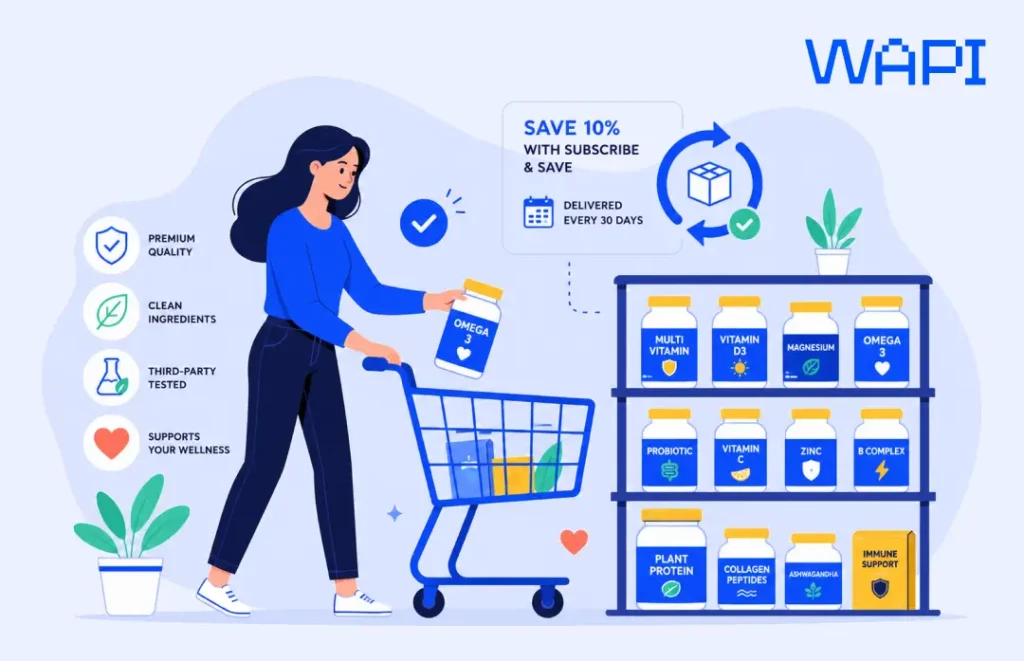
The mechanics suit ecommerce almost perfectly. A bottle runs out, the customer reorders, and a subscription quietly compounds into recurring revenue. Few product categories build repeat purchases this naturally, which is what turns supplements into high demand products rather than seasonal ones. Within the category, the niches keep multiplying, from gut-health and multivitamins to formulations for specific routines and even pets, and global sales keep climbing across all of them.
The constraint is trust. Supplements are a product-quality and compliance category first and a marketing category second. Buyers read labels, check claims, and reward transparency. Selling quality products with clear sourcing is not a nice-to-have here. It is the entire moat, and it is also where regulated, careful supplement fulfillment stops being a back-office detail and starts being part of the product.
Personal care and beauty
The personal care industry runs on habit and discovery in equal measure. Cleansers, serums, and balms sell to nearly everyone, while a steady churn of hero ingredients keeps pulling new buyers in. Search interest in specific actives can climb hundreds of percent in a year, then settle, then rotate to the next one.
That rhythm rewards a particular kind of seller. Build a small line of dependable products that always sell, then ride the ingredient stories on top of that base. Brands that lead with natural ingredients, clean packaging, and a believable benefit tend to convert curiosity into consistent sales rather than a one-week spike.
Essential oil diffusers and aromatherapy sit at the edge of this category and the wellness one. They carry decent margins, photograph beautifully, and pair naturally with refills and accessories that lift the basket. As with supplements, beauty is a quality-and-handling category, which is why brands lean on specialist cosmetics fulfillment rather than a generalist warehouse.
Insight: Trend-sensitive categories like beauty punish slow logistics twice. Miss the spike and you lose the sale. Carry the overstock after the spike and you lose the margin. Speed and forecasting matter more here than in almost any other category.
Pet supplies and pet products
Pet owners spend like the animal is a family member, because to them it is. The global pet care market reached roughly USD 190 billion in 2026, and e-commerce, subscriptions, and direct-to-consumer brands are making repeat purchases easier to capture. Pet spending tends to be more resilient than many discretionary categories during economic slowdowns, which makes pet supplies one of the steadier pockets of market demand a store can plan around.

Personalization is the conversion lever. Engraved tags, custom portraits, and custom pet gifts carry an emotional premium that a generic bowl never will. Stylish pet apparel and design-forward beds turn a commodity into something an owner wants to show off. The buying is emotional, the margins reflect it, and the photos sell themselves.
Treat-and-consumable lines add the repeat-purchase engine that apparel lacks, so a smart pet catalog usually mixes both: durable hero pieces for acquisition, consumables for retention.
Phone accessories and tech accessories
The math here is almost unfair. Nearly every adult carries a smartphone, and every phone is a recurring demand event for cases, cables, chargers, and mounts. The global accessories market for mobile was estimated at around USD 105 billion in 2025, with protective cases accounting for 32 percent of the market and online sales expected to expand faster than the overall category.
Phone accessories reward personalization and speed. Cases are as much fashion as protection, so design ranges and fast restocks on trending styles win. MagSafe wallets, stands, and charging pads keep the category fresh as device standards shift. The same logic extends to tech accessories more broadly, where small, light, high-margin items ship cheaply and bundle well.
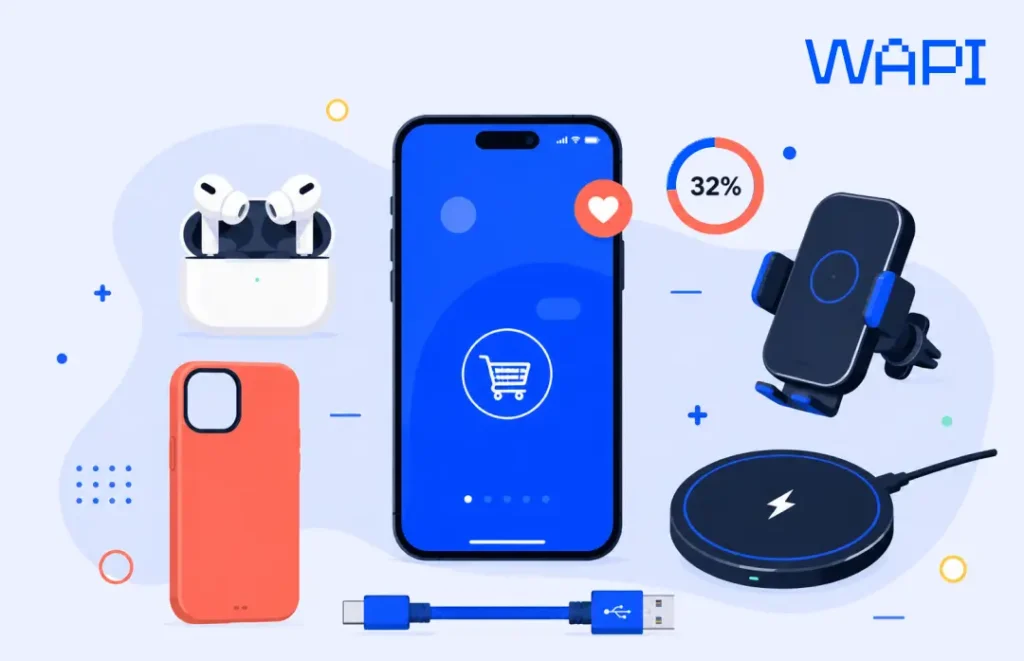
Car accessories deserve a mention as an adjacent pocket of strong demand and steady consumer interest. Phone mounts, diffusers, and dash gadgets ride the same impulse-buy energy and the same forgiving shipping economics.
Home and lifestyle
People kept investing in their spaces, and the home category absorbed the spend. Wall art is the quiet workhorse here. It prints on demand, ships flat, carries a healthy markup, and lets buyers express taste cheaply. A store can launch hundreds of wall art designs without holding a single frame, which is about as low-risk as physical products to sell online ever get.
Around the wall art sit the accent pieces that make a room feel intentional: custom lamps, neon-style signs, throw pillows, and stylish storage solutions that hide clutter without looking like storage. These products sell on aesthetics and emotion, which keeps them out of the pure price war that commodities fall into.
Reusable water bottles bridge home, fitness, and sustainability, and they have settled into stable sales rather than a fad. They personalize well, they refill the gifting calendar, and the eco angle gives the marketing something true to say.
Home fitness
The at-home workout habit that formed in 2020 never fully reversed, and the gear kept selling. Yoga mats, resistance bands, foam rollers, and compact recovery tools all benefit from a buyer who wants results without a gym membership. The products are small, durable, and inexpensive to ship, which keeps the unit economics friendly.
Resistance bands in particular punch above their weight. They are cheap to source, bundle into sets that lift average order value, and appeal to beginners and serious lifters alike. Yoga mats anchor the category as the obvious entry purchase, then accessories follow.
Recovery has quietly become its own sub-category. Foam rollers, massage guns, and mobility tools sell to the same buyer who started with a mat and a band, which gives the category a natural upsell path instead of a single transaction.
Home office equipment
Remote and hybrid work turned the home office from a corner of the bedroom into a category. Home office equipment, from adjustable laptop stands and desk organizers to cable management and ergonomic add-ons, sells to a buyer who has decided their setup is permanent and worth spending on.
It is a quieter category than pet or beauty, but a steady one, driven by upgrade cycles rather than hype. The buyers research, compare, and value product quality over novelty, which favors sellers who lead with substance.
Bundling is the lever here. A laptop stand, a desk organizer, and a cable kit sold together lift the average order value and read as a complete workspace rather than one accessory, which is how the stronger stores in this category build margin.
Toys and learning
Toys are seasonal and gift-driven, with demand concentrating hard around holidays and birthdays. Educational toys carry an extra advantage: parents and grandparents will pay a premium for anything framed as good for a child’s development, which props up margins that pure entertainment toys cannot hold.
Outdoor toys round out the category with their own seasonal curve, peaking in spring and summer. The trick across toys is planning inventory and fulfillment capacity around those peaks, because the category forgives almost nothing about timing.
Educational toys also age up well. A brand that earns a parent’s trust on a toddler product can sell that same parent the next developmental stage a year later, which turns a seasonal gift into a multi-year relationship.
What Shopify’s latest growth snapshot shows
The durable categories above are the foundation. On top of them sits a faster layer of trending products that surge for a season, and reading that layer is its own skill. Some of the best products to sell on Shopify are not the newest ones, so treat this layer as a supplement to the base, not a replacement for it. Shopify publishes the categories posting the steepest year-over-year sales growth among its merchants, a Shopify bestsellers readout that doubles as a snapshot of current consumer trends. The latest published snapshot, from September 2025, is a useful read on near-term momentum.
| Fast-growing category | YoY sales growth |
|---|---|
| Sports trading cards | +1,786% |
| Printable fabric | +1,608% |
| Instant coffee | +1,339% |
| Digestive supplements | +1,075% |
| Hoodies | +965% |
| Energy drinks | +945% |
| Multivitamin supplements | +573% |
| T-shirts | +541% |
Read this table for direction, not for a stock order. A category growing 900 percent off a small base is a signal worth investigating, not a guarantee. Two market trends are doing real work underneath the numbers: a sustained consumer focus on health and performance, visible in the supplement and energy lines, and ordinary seasonality, visible in the move toward hoodies as the weather turns.
That seasonality point matters more than sellers expect. The same product can look like a breakout in September and a dud in May. Before you read a category as a trend, separate genuine emerging trends from the calendar.
Insight: Build your catalog as two layers. A durable base of consistent-demand categories pays the bills every month. A small, rotating layer of trending products captures the spikes. Stores that bet everything on the spike layer live and die by the algorithm.
Match the product to your model
The same product can be a great fit for one seller and a trap for another. What separates them is how a product scores on two axes: how stable its demand is, and how much margin it leaves once you have paid to acquire and ship it. Plot the categories on those two axes and the most profitable product categories sort themselves out.
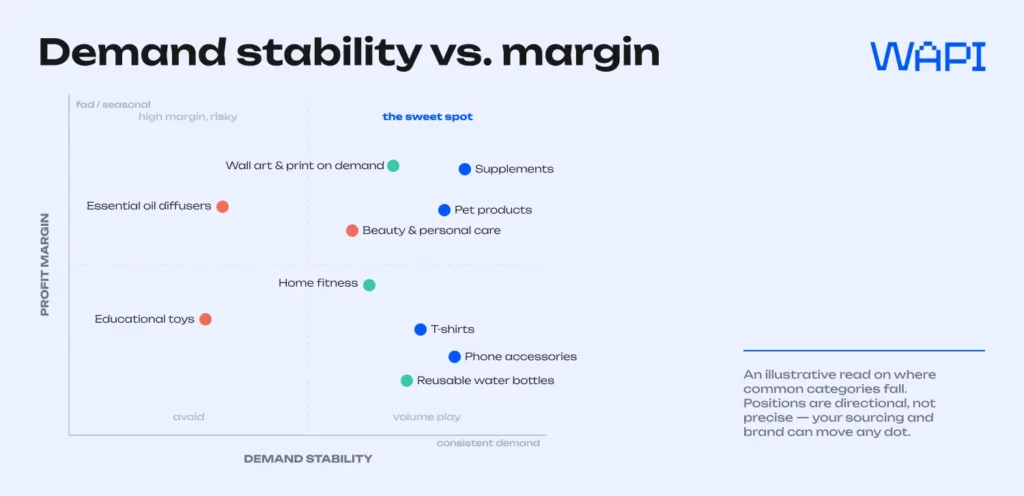
The top-right quadrant, consistent demand paired with healthy profit margins, is where you want most of your catalog to live. Supplements, pet products, and design-led print on demand cluster there. The bottom-right, steady but thin-margin, is a volume game that works only at scale, which is where careful fulfillment economics decide whether you survive. The left side is for calculated bets, not your core.
Our advice: Anchor your store in the right half of that chart. If a category you love sits on the thin-margin side, it can still work, but only if your cost to pick, pack, and ship is genuinely competitive. Thin margins are won or lost in the warehouse, not the ad account.
Best products by seller type
The right category also depends on the kind of store you are running. Here is a quick read on what tends to fit each type of seller.
| Seller type | Better fit | Why |
|---|---|---|
| First-time Shopify seller | Print-on-demand apparel, wall art | Low inventory risk |
| Subscription brand | Supplements, beauty, pet consumables | Built-in repeat purchases |
| EU-focused seller | Beauty, supplements, phone accessories | Strong fit for regional fulfillment |
| High-AOV brand | Home office, lifestyle, pet furniture | Bundle and upgrade potential |
Turn a bestseller into a business that lasts
Finding good products to sell on Shopify is the first ten percent. Building a successful Shopify store is the other ninety, and it is where serious Shopify sellers separate from hobbyists. Four things carry that weight, and none of them is the product itself.
Profit margins and the real cost stack
New sellers price off the product cost and the ad cost, then wonder where the money went. The money went to everything in between. The most profitable products are simply the ones whose selling price absorbs the cost of goods, payment and platform fees, marketing, returns, and the full cost of getting the order out the door, with profit still left on top.
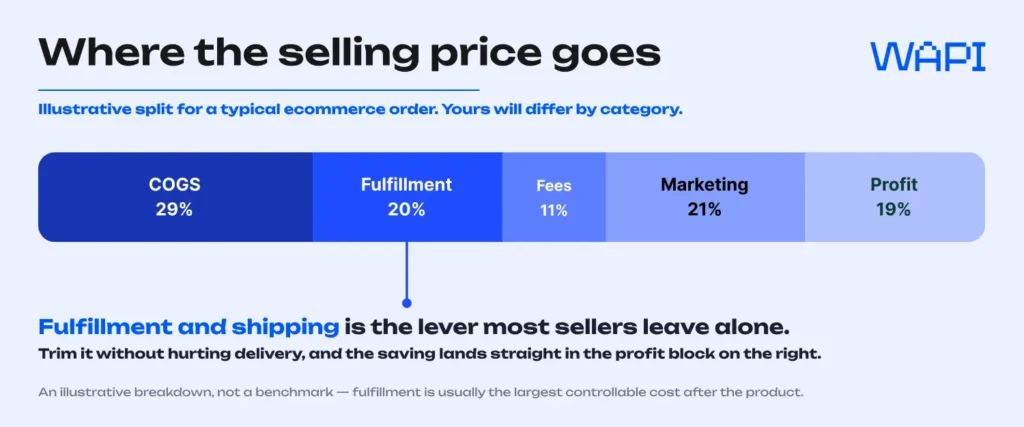
Read that chart once and the strategy becomes obvious. You cannot easily cut your cost of goods without hurting product quality, and cutting marketing usually cuts sales. Fulfillment is the line you can improve without the customer ever feeling it, which is why it is the first place a serious seller goes looking for margin.
Repeat purchases and average order value
Acquiring a customer is expensive. Selling to that customer again is nearly free. The most profitable products to sell online usually combine repeat purchases with manageable fulfillment costs, which is why categories like supplements, beauty, and pet consumables attract repeat customers on their own and quietly outperform flashier one-time sellers over a year.
Average order value is the other dial. Bundles, volume discounts, and well-placed cross-sells lift the basket so each acquisition pays back faster. A store that raises average order value and earns repeat purchases can outspend competitors on traffic and still come out ahead, because every customer is worth more.
Find reliable suppliers
Behind every store that scales is a supply chain that holds. To find reliable suppliers, order samples before you commit, check lead times honestly, and read how they handle a problem, not just a perfect order. Quality products from reliable suppliers protect the one thing paid traffic cannot buy back: a reputation.
This matters most in the trust-heavy categories. In supplements and beauty, a supplier who lets quality slip does not cost you a return. They cost you the customer and everyone that customer tells.
Fulfillment is where margins live or die
You can pick the perfect product, source it well, and price it for a real margin, then hand all of that back through slow, expensive, error-prone fulfillment. The customer experience is mostly the delivery experience. Late parcels, broken items, and clumsy returns undo great marketing in a single order.
This is the part WAPI exists to handle. Reliable ecommerce fulfillment turns the largest controllable cost on that chart into an advantage instead of a leak, and it scales with you so a sales spike becomes a good week rather than a logistics crisis. For a store on the platform, that means Shopify fulfillment that plugs straight into your orders. The discipline is simple to name and hard to execute: accurate pick, pack, and ship, fast dispatch, and clean returns, run consistently at volume.
For sellers moving into Europe, location does the rest of the work. Holding stock in fulfillment centers across Europe puts inventory next to the customer, which cuts delivery times and shipping cost at the same time. For markets where buyers still prefer to pay on arrival, cash on delivery keeps conversion high where card-only checkout would lose the sale. And when your current setup stops keeping up, switching your fulfillment provider is a more solvable problem than most founders fear.
Key point: The best selling Shopify products are won at two ends most sellers ignore: choosing categories with consistent demand and real margin at the front, and protecting that margin with sharp fulfillment at the back. The product in the middle is the easy part.
If you want the wider context for where these categories are heading, our read on ecommerce trends for 2026 covers the platform and buyer shifts that sit underneath this year’s bestseller list.
Where to start this week
Pick one category from the right half of the quadrant, run three product ideas through the four-filter test, and validate the strongest one with a small ad test before you order stock. Then decide how those orders will ship while the test is still running, because the seller who plans fulfillment before the first sale is the one who keeps the margin when the sales arrive.
Best selling Shopify products: FAQ
What are the best selling products on Shopify right now?
The best selling items on Shopify are durable categories rather than single products: T-shirts and apparel, health supplements, beauty and personal care, pet supplies, phone accessories, and home goods like wall art. Faster-moving trending products rotate each season on top of that base, but the durable categories are where most Shopify stores build steady revenue.
How do I find trending products to sell on Shopify?
Start with Google Trends to read search interest over time, then cross-check against the bestseller lists on Amazon, eBay, and Etsy to confirm people are actually buying. Two independent signals pointing the same way is the cue to investigate. One spike on its own is usually a fad, not a trend.
Which products have the healthiest profit margins?
Small, light items with personalization or a strong brand story tend to hold the best margins: print on demand wall art and apparel, phone accessories, beauty, and supplements. As a rough floor, aim for 30 to 50 percent gross margin before you scale, and remember that fulfillment cost quietly decides how much of that margin you actually keep.
Are pet products still a good niche on Shopify in 2026?
Yes. The global pet care market sits near USD 190 billion, with e-commerce and subscriptions making repeat purchases easier to capture, and demand that tends to be more resilient than many discretionary categories. Personalized items and custom pet gifts carry an emotional premium, while treats and consumables drive the repeat purchases that make the niche profitable over time.
How many products should I launch with when I start selling?
Fewer than instinct suggests. A tight range of products you can describe, photograph, and fulfill well beats a sprawling catalog of items you barely know. Validate demand on a small set, double down on the winners, and expand from proven sales data rather than guesses.
When should a Shopify store move from self-fulfillment to a 3PL?
Watch for four signals: order volume that eats your week, picking and shipping errors creeping up, delivery times slipping, and a plan to expand into new countries. Any one of them is a cue to look at a 3PL. Handing Shopify fulfillment to a partner like WAPI turns those growing pains into capacity, so a sales spike becomes a good week instead of a backlog.
Can WAPI fulfill Shopify orders across Europe?
Yes. WAPI connects directly to your store and handles the full order cycle, so this is exactly what Shopify fulfillment with WAPI covers: receiving, storage, pick, pack, and ship, and returns. Stock held in WAPI’s European fulfillment centers ships from close to the buyer, which shortens delivery times and lowers shipping cost on cross-border orders.
Does WAPI handle supplement and cosmetics fulfillment for Shopify stores?
Yes, and these are treated as specialist categories rather than general cargo. WAPI offers dedicated supplement fulfillment and cosmetics fulfillment with the careful handling these trust-heavy, often regulated products require, so the back end matches the standard your brand sets on the front end.
Does WAPI offer cash on delivery for Shopify orders in Europe?
Yes. WAPI’s cash on delivery service lets customers pay when the parcel arrives, which protects conversion in markets where shoppers still prefer not to pay upfront. It is a practical way to win sales you would otherwise lose at a card-only checkout.
How do I tell a fad from a product with consistent demand?
Pull the multi-year view in Google Trends instead of the last 90 days. Consistent demand shows up as a line that climbs and holds, including through the off-season. A fad shows up as a sharp vertical spike with an equally sharp drop. If the interest survives a full year and shows up in marketplace bestsellers too, you are looking at a real category rather than a moment.

Keep in touch with WAPI!
Get free ecommerce tips, news, webinars and other stuff.
 Community