
 back to list

For many supplement brands, January is the best month of the year. People start new routines after the holidays, and sales grow fast in the first days of the month. In our network, supplement sales usually grow quickly in January and stay high for about 6 weeks.
The problem is timing. The supplement January peak starts right after the busiest and most difficult weeks for logistics. Carriers close for holidays, warehouses are full of Christmas orders, and many buyers are away from home. Brands that plan in October sell more in January.
This guide gives you a simple plan, month by month, from October to February.
Why January is hard for supplement logistics
There are 3 main reasons.
Holidays stop deliveries. Between December 24 and January 7, most European markets have 2 to 6 public holidays. On these days, most carriers do not deliver, and many pickup points are closed.

Warehouses are busy in December. Before Christmas, warehouses ship more orders than at any other time of the year. New stock needs the same people and the same space, so it can take longer to accept it. Stock that arrives late may not be ready to sell when January starts.
January buyers decide quickly. Many people buy supplements without much planning. A parcel may be late, or it may wait at a pickup point during the holidays. Then the buyer may decide not to take it. For cash on delivery orders, every refused parcel means shipping costs in both directions and a lost sale.
The plan: October to February
Figure 1 shows the plan in 5 steps.
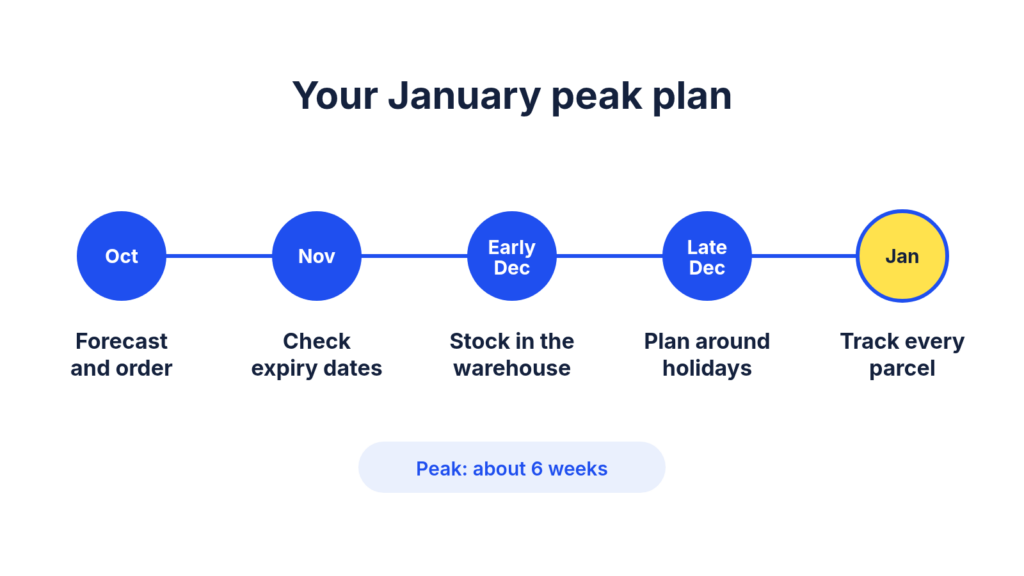
Figure 1. Start in October, so your stock is ready before the holidays.
October: forecast demand and order production
Start with your own data. Compare your sales last January with a normal month. Then calculate how much stock you need in the warehouse by mid-December. Table 1 shows an example.
Table 1. Example stock plan for the January peak
| Period | Weeks | Units per week | Units needed |
|---|---|---|---|
| December 14 – January 3 (holiday weeks) | 3 | 500 | 1,500 |
| January 4 – February 14 (peak) | 6 | 750 | 4,500 |
| Safety stock | 2 | 750 | 1,500 |
| Stock needed by mid-December | 7,500 |
Then contact your manufacturer. Production, packaging and transport to the warehouse can take several weeks. If you order in December, the stock may arrive after the peak has started.
November: check shelf life and batches
Check the expiry dates of the stock you already have. Stock that expires in spring is a risk for January. Refused and returned parcels return to the warehouse weeks later. By then, products with a short shelf life may be too old to sell again.
Use your newest batches for the peak. Make sure the warehouse records the batch number and the expiry date of every delivery. Then it can ship the batch that expires first and keep newer batches for later.
Early December: get stock into the warehouse
Plan for your stock to be received and ready to sell before mid-December. Ask your warehouse for the last day it accepts new stock before the holidays. Then book a delivery time early.

Before the stock ships, check that every product has a barcode and the correct local label. If the warehouse needs to add barcodes or new labels, it must do this before it can sell the stock. In December, this work can take several days.
Late December: plan around holidays
In most markets, carriers do not deliver on public holidays. Table 2 shows the holidays that fall on weekdays in all 18 EU markets where we collect cash on delivery.
Table 2. Weekday holidays from December 21, 2026 to January 8, 2027
| Market | Holidays on weekdays | Delivery days (of 15) |
|---|---|---|
| Austria | Dec 25, Jan 1, Jan 6 | 12 |
| Bulgaria | Dec 24, Dec 25, Dec 28, Jan 1 | 11 |
| Croatia | Dec 25, Jan 1, Jan 6 | 12 |
| Cyprus | Dec 24, Dec 25, Jan 1, Jan 6 | 11 |
| Czechia | Dec 24, Dec 25, Jan 1 | 12 |
| Estonia | Dec 24, Dec 25, Jan 1 | 12 |
| Germany | Dec 25, Jan 1 | 13 |
| Greece | Dec 25, Jan 1, Jan 6 | 12 |
| Hungary | Dec 24¹, Dec 25, Jan 1 | 12 |
| Italy | Dec 25, Jan 1, Jan 6 | 12 |
| Latvia | Dec 24, Dec 25, Dec 31, Jan 1 | 11 |
| Lithuania | Dec 24, Dec 25, Jan 1 | 12 |
| Poland | Dec 24, Dec 25, Jan 1, Jan 6 | 11 |
| Portugal | Dec 25, Jan 1 | 13 |
| Romania | Dec 25, Jan 1, Jan 6, Jan 7 | 11 |
| Slovakia | Dec 24, Dec 25, Jan 1, Jan 6² | 11 |
| Slovenia | Dec 25, Jan 1 | 13 |
| Spain | Dec 25, Jan 1, Jan 6 | 12 |
Holidays on Saturday (December 26 and January 2) are not included. Bulgaria moves December 26 to Monday, December 28. In Germany, January 6 is a holiday in 3 states. Hungary: a moved rest day in 2026. Slovakia: check the status of January 6 before you plan.
The result is a short working period. Across the 18 markets, only 11 to 13 of the 15 weekdays between December 21 and January 8 are delivery days. Bulgaria, Cyprus, Latvia, Poland, Romania and Slovakia have the fewest.
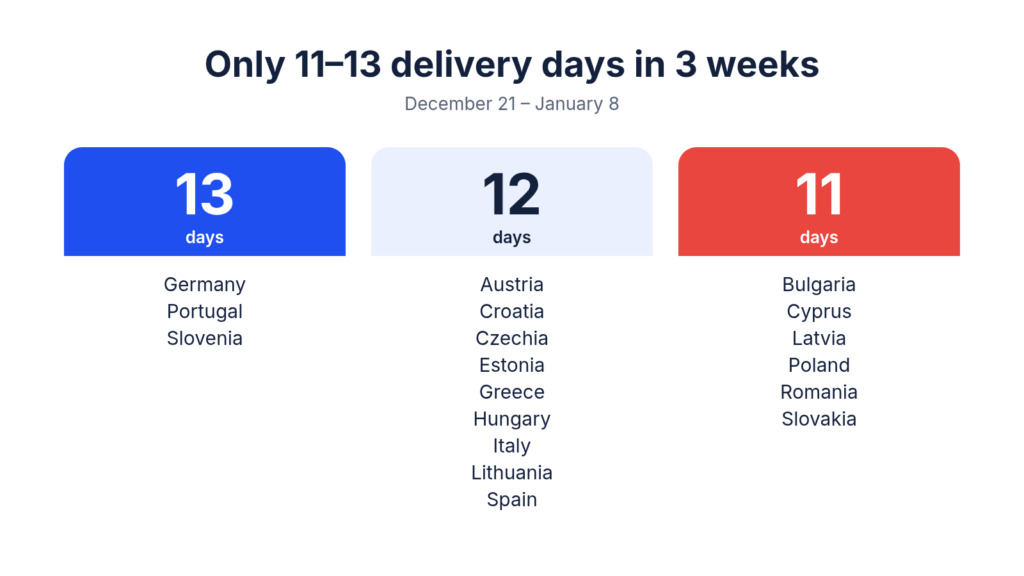
Figure 2. Delivery days from December 21 to January 8 in 18 EU markets.
Here is what you can do:
- Plan ads around long closures. Orders placed just before a long closure often wait several days for delivery. Move part of your budget to the days after the holidays.
- Show clear delivery dates. Tell buyers on your website when their parcel will arrive.
- Ask for a holiday schedule. Your provider should share the closure dates of each warehouse and carrier.
January: track every parcel
In January, a small delay costs more than in any other month. Your provider should act quickly when a parcel has a problem. At WAPI, our AI-automated software supports the peak in 4 ways:
- Holiday alerts. The system warns you before warehouse and carrier closures, so you can ship stock in time.
- Pickup-point deadline control. The system shows parcels close to the pickup deadline, so your team can contact the buyer. This cuts expired pickups by 40–55%.
- Refusal reports. You see refusals by country and by week, so you can change your campaigns during the peak.
- Automatic extra delivery attempts. A new delivery request goes to the carrier 80% faster than a manual request.
Returns also grow in January. Plan time and staff to check returned supplements and return them to stock. Our guide to ecommerce returns management explains how.

February: review and plan the next peak
When the peak ends, check 4 numbers: sales by week, buyout rate by market, refused parcels and stock left in the warehouse. They show where you lost sales and where you had too much stock. Use them to plan production for next year.
If your current provider did not handle the peak well, February and March are a good time to change provider. Our guide on how to change fulfillment provider explains the steps.

January peak checklist
- Calculate your January stock with last year’s data.
- Order production in October.
- Check expiry dates and use your newest batches.
- Check barcodes and local labels before shipping.
- Book your delivery to the warehouse early.
- Get holiday schedules for every market.
- Plan ads and delivery messages around closures.
- Track refusals, pickup deadlines and returns every day in January.
- Review the results in February.
Do you want us to check your plan? Our team can review your stock, markets and delivery dates before the holidays. Get a quote or learn how our supplement fulfillment works.
FAQ
When should supplement stock arrive at the warehouse for January?
Plan for your stock to be received and ready to sell before mid-December.
How much extra stock do I need for January?
Use your own data from last January. For example, a brand sells 500 units per week, and its January sales are 1.5 times higher. This brand needs about 7,500 units in the warehouse by mid-December, including safety stock.
Which markets does WAPI cover with cash on delivery?
WAPI collects cash on delivery in 19 markets: the 18 EU countries in Table 2 and Mexico. You do not need stock in every market: 1 warehouse can serve several nearby countries.
Does WAPI record batch numbers and expiry dates?
Yes. Some WAPI warehouses do this as a standard step. In the other warehouses, we add it when a brand needs it. Tell us before your first delivery.
Is it too late to start with WAPI before January?
No, if you start now. A new launch takes from 48 hours to 2 weeks. Your stock should still be in the warehouse before mid-December. If you are moving from another provider, we recommend February or March for the move.

Keep in touch with WAPI!
Get free ecommerce tips, news, webinars and other stuff.
 Community