
 back to list
Modern ecommerce in the European Union operates in an environment defined by high expectations, strict regulations, complex cross-border procedures, and rising customer demands. In leading markets such as Germany, expectations for fast delivery, precise tracking, frictionless returns, and a reliable fulfillment experience have become the new standard. This shift has transformed logistics into a central element of every business model, not merely an operational function.
At the same time, building an internal logistics department with warehouse staff, systems, transportation planning, and compliance expertise requires substantial investment. That is why many brands eventually type what is a 3pl company into search engines and begin to explore how 3PL partners can streamline operations, reduce costs, and accelerate expansion across the EU.
This article provides a deep, comprehensive explanation of what a 3PL is, what third party logistics companies do, how 3PLs integrate with supply chain management, and why they have become essential for ecommerce businesses selling products online.
Why Third Party Logistics Matters in European Ecommerce
The new logistics reality in the EU
Ecommerce growth across Europe has created a fragmented but extremely demanding logistics environment. Deliveries now move across multiple borders, languages, tax regimes, packaging regulations, and carrier networks. In this environment, the role of third party logistics becomes strategic: 3PLs stabilize operations, connect markets, and enable businesses to scale without building their own fulfillment infrastructure.
Why major markets like Germany define fulfillment standards
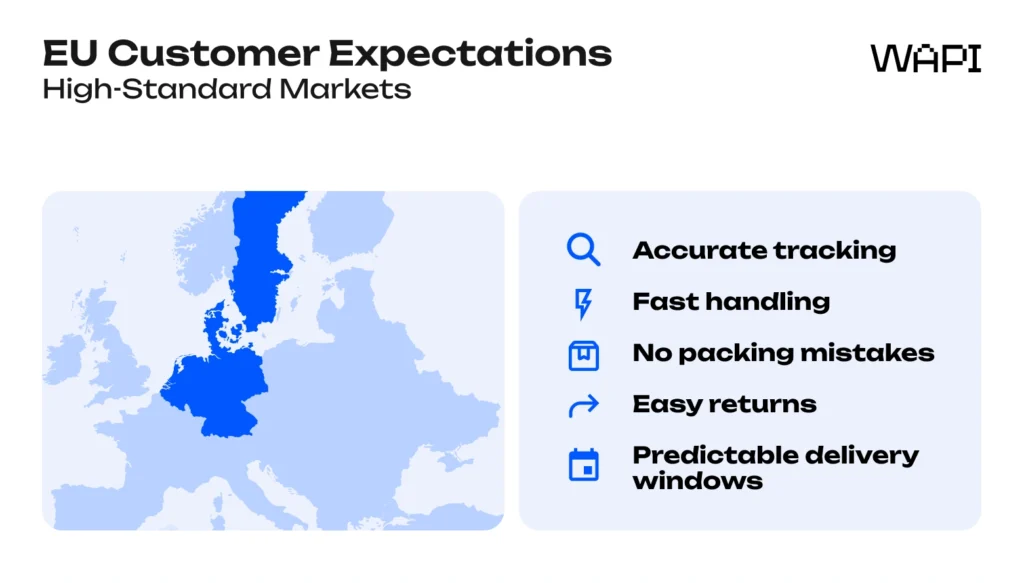
Germany is often referenced in industry benchmarks because customers expect ultra-high delivery precision, transparent tracking, and consistent service across all sales channels. EU-wide operations are heavily influenced by German expectations, meaning brands must invest in reliable logistics operations and order fulfillment accuracy from day one.
Insight: German delivery standards have become the baseline for the entire EU ecommerce ecosystem, pushing companies to adopt more advanced fulfillment systems and supply chain technologies.
Understanding Third Party Logistics
The definition of third party logistics (3PL)
Third party logistics refers to the outsourcing of logistics operations — such as warehousing, fulfillment, transportation, and returns — to an external partner. It is used by ecommerce businesses, wholesalers, and retailers that want scalable logistics without managing their own facilities or staff.
This outsourcing model is not short-term. It is a strategic, long-term commitment in which a company delegates distribution and logistics to specialized third party logistics businesses.
What is a third party logistics company in ecommerce?
A third party logistics company acts as the operational backbone of ecommerce businesses. It stores goods, processes orders, ships parcels, handles returns, and ensures smooth movement of products across the supply chain. A typical 3PL also provides advanced inventory management, warehouse operations, transportation services, and even value added services such as kitting, bundling, and custom packaging.
A 3PL is therefore more than a warehouse. It is an integrated, technology-driven ecosystem that manages the entire supply chain or specific parts of it, depending on the client’s needs.
How third party logistics 3PL integrates into supply chain management
3PLs sit at the intersection of ecommerce, warehousing, transportation, and customer experience. Within supply chain management, they synchronize data flows, stock movement, and carrier networks to create unified, predictable delivery outcomes.
Key point: A well-structured third party logistics 3PL setup connects supplier operations, warehouse management, transportation networks, and returns processing into a single coordinated system.
This level of integration drives supply chain efficiency and reduces fragmentation, especially in multi-country EU setups.
What Do Third Party Logistics Companies Do?
Core logistics activities a 3PL provider handles
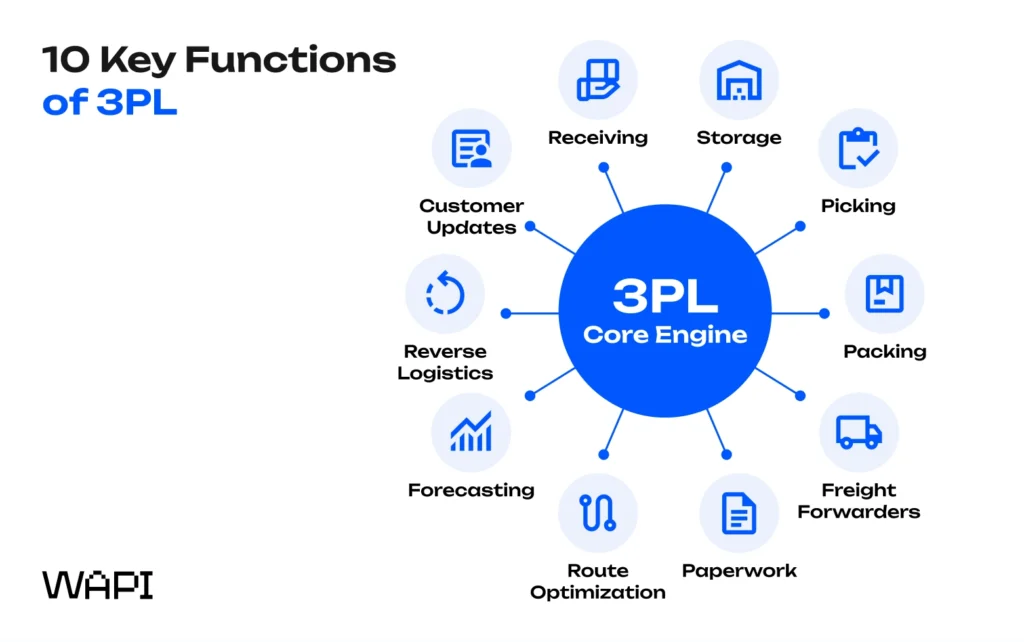
When brands ask “what does a 3pl company do,” they often discover that 3PLs perform a substantial portion of a company’s logistics activities, including:
- receiving and storing client’s inventory
- providing warehouse space and storage space
- running daily warehouse operations
- ensuring precise order fulfillment
- managing reverse logistics and return flows
- offering fulfillment services with strict SLAs
- integrating multiple sales channels
- optimizing shipping costs
- coordinating freight forwarders and carriers
- offering strategic distribution services
These core functions allow ecommerce brands to operate at European scale without the need for their own logistics infrastructure.
The role of 3PL in managing the entire supply chain
A 3PL not only handles operational tasks; it actively coordinates transportation networks, warehouse flows, carrier selection, and regulatory compliance. This orchestration ensures that the entire supply chain becomes more predictable and efficient.
3PLs often use powerful tools for demand forecasting, stock planning, and data analytics to help brands maintain optimal inventory levels.
End-to-end logistics operations
An advanced 3pl provider manages full logistics operations, including:
- inbound receiving
- putaway
- picking
- packing
- documentation and label creation
- transportation management
- delivery coordination
- return processing
3PLs handle the entire shipping process: carrier selection, route optimization, and rate negotiation. For cross-border EU shipments, they also collaborate with freight forwarders, customs partners, and sometimes a freight broker.
Why businesses rely on outsourced logistics providers
Companies partner with outsourced logistics providers to reduce overhead, avoid large upfront costs, remove operational complexity, and scale quickly when demand increases. By outsourcing logistics activities, brands free resources to invest in their core competencies such as product development, marketing, community building, and improving how they provide customer service.
Advice: Outsourcing to a strong 3PL allows brands to replace fixed costs with flexible, usage-based costs and eliminate the need for an own warehouse.
Services Provided by a 3PL Provider
Inventory management and inventory control
A strong 3PL uses advanced inventory management tools and WMS systems to:
- manage inventory across multiple warehouse locations
- maintain real-time visibility into inventory levels
- prevent stockouts
- automate replenishment flows
- accurately track inventory levels at every stage
Many brands rely on structured methodologies such as proper stock control to improve SKU accuracy and reduce holding costs.
Warehouse operations, warehouse space and storage space
3PLs operate professional warehouse operations with trained staff, optimized pick paths, and robust quality control. Depending on the business model, companies can scale warehouse space usage up or down based on seasonality, without investing in physical infrastructure.
Modern operators — such as WAPI — use automated systems, scanning, and digital workflows for accuracy and operational efficiency.
Fulfillment services and ecommerce fulfillment
3PLs provide fulfillment services for ecommerce businesses, including processing orders from marketplaces, direct-to-consumer stores, and social commerce channels. This often includes:
- multi-channel integrations
- packaging customization
- adherence to channel-specific requirements (e.g., Amazon, Otto)
- real-time updates
This makes them indispensable for ecommerce fulfillment at scale.
Order fulfillment workflow and picking accuracy
The fulfillment process includes receiving orders, picking items, packing them according to the client’s rules, and preparing shipments. When a customer places an order in an online store, the system triggers automated workflows.
Accurate order fulfillment helps maintain high customer satisfaction, especially in competitive EU markets.
Order processing typically includes documentation such as a waybill, especially for cross-border shipments.
Reverse logistics and returns processing
European ecommerce has some of the highest return rates in the world. A 3PL ensures that reverse logistics is structured, predictable, and fast, reducing processing times and improving retention.
Reverse logistics flows may include:
- inspection
- sorting
- repacking
- restocking
- disposal in compliance with local regulations
Value added services and customer experience
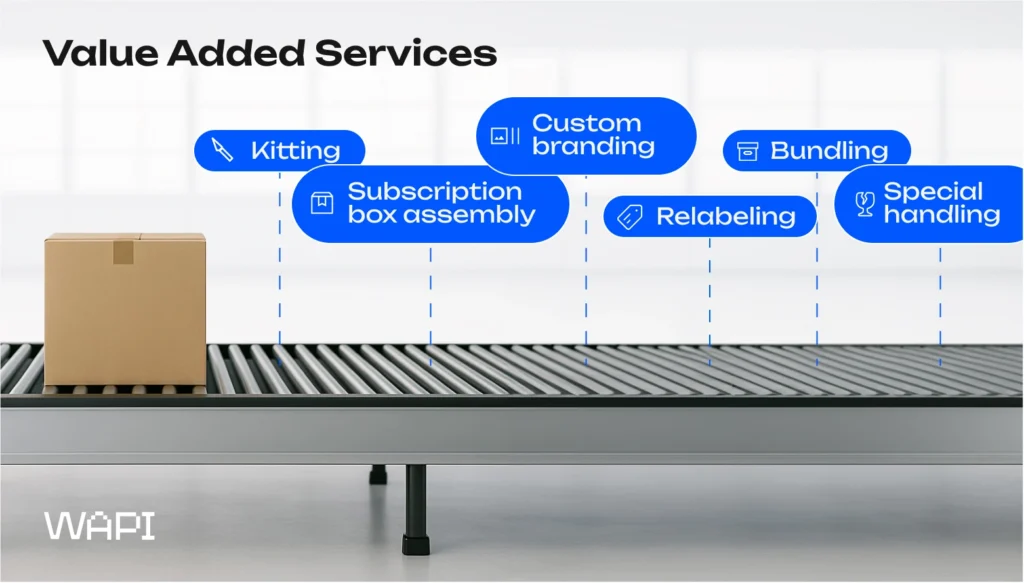
3PLs often provide value added services, including:
- kitting
- subscription box assembly
- custom branding
- relabeling
- bundling
- special handling for fragile items
These services support differentiation and contribute to long-term customer satisfaction.
Transportation services and transportation management
A professional 3PL coordinates:
- courier networks
- pallet freight
- long-haul distribution
- cross-border movements
- final-mile delivery partners
In addition, transportation management ensures improved routing, reduced lead times, and optimized shipping costs.
The 3PL Landscape in the European Logistics Industry
Common 3PL models across the EU
The European logistics industry consists of a diverse mix of 3PL models, from small regional providers to highly automated international networks. Most third party logistics setups fall into three categories:
1. Asset-based 3PLs — companies that own their fulfillment centers, fleets, and transportation assets.
2. Non asset based providers — organizations that coordinate logistics through networks of partners, carriers, and freight forwarders.
3. Hybrid 3PLs — combining owned infrastructure with outsourced capabilities for flexibility.
This diversity allows ecommerce businesses to choose a party logistics provider whose infrastructure, scale, and technology match their expansion plans.
Warehouse locations and cross-border setups
Strong 3PL partners maintain a network of strategically placed warehouse locations across the EU. This enables brands to ship domestically in countries like Germany, France, the Netherlands, Spain, and Poland with reduced transit times.
3PLs often distribute inventory across several fulfillment centers to ensure:
- shorter delivery distances
- faster shipping times
- better supply chain efficiency
- reduced shipping costs
- more resilient logistics operations
The role of freight forwarders and freight broker networks
Cross-border ecommerce depends heavily on freight forwarders, who coordinate international cargo movement, negotiate shipping rates, and manage paperwork. Many 3PLs integrate forwarders directly into their transportation workflows.
A freight broker may also participate in rate negotiation or sourcing the most efficient route between two regions. This is especially relevant for mid-size brands scaling into new European markets.
Non asset based providers in European logistics
Non asset based providers play a key role in the EU ecosystem by offering maximum flexibility. They rely on distributed carrier networks rather than owning fleets or warehouses, allowing rapid response to market dynamics, seasonal spikes, and new product launches.
This model is particularly common in Europe due to tight border proximity and the high importance of international shipping, cross-docking, and multi-node supply chain flows.
How 3PL Improves Supply Chain Efficiency
Managing supply chain operations with advanced technology
An advanced third party logistics provider manages supply chain operations using unified IT ecosystems, connecting:
- WMS (warehouse management systems)
- inventory forecasting tools
- carrier selection engines
- real-time scanning and tracking
- customer return management
- marketplace integrations
These systems ensure consistency, visibility, and accuracy from inbound receiving to delivery.
Data analytics, forecasting and real-time visibility
Modern 3PLs rely heavily on data analytics to optimize demand planning, route performance, delivery speed, carrier selection, and inventory distribution.
Insight: Real-time analytics allows 3PLs to adjust to fluctuations instantly, improving resilience and ensuring steadier on-time delivery performance.
With real-time dashboards, brands can:
- monitor their inventory levels
- track return flows
- analyze channel-specific performance
- identify bottlenecks
- plan promotions properly
Predictive analytics helps 3PLs manage inventory more accurately during seasonal peaks.
Tracking inventory levels across fulfillment centers
Using automation and digital scanning, 3PLs track inventory levels in every storage zone of a warehouse. This ensures accurate order processing and reduces errors.
Solutions like structured stock control create transparency across channels and help teams avoid lost or misplaced stock.
Why supply chain visibility drives operational performance
End-to-end visibility across the entire supply chain enables better decision-making:
- which carriers perform best
- how quickly returns are processed
- where delays occur
- how efficiently SKUs move through each node
Key point: High visibility is not just a technological upgrade — it is the foundation of reliable and consistent logistics performance.
Cost Optimization and Scalability with 3PL
How 3PL achieves cost savings and cost efficiency
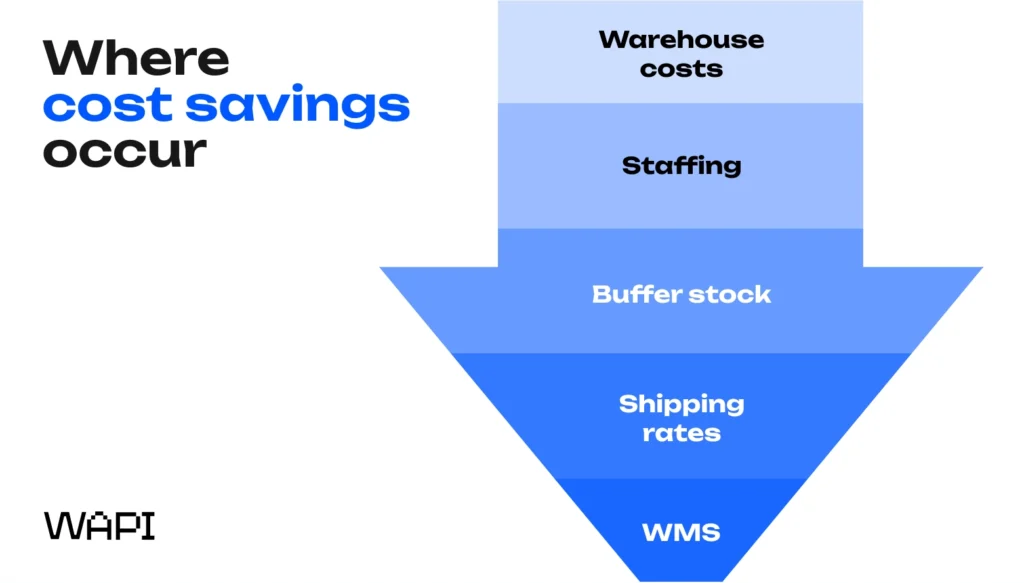
3PLs leverage economies of scale to reduce both warehousing and transportation expenses. Since they process large volumes, they negotiate better shipping rates with carriers, helping ecommerce businesses achieve meaningful cost savings and higher cost efficiency.
Outsourcing eliminates:
- warehouse leasing costs
- equipment investments
- staffing burden
- maintenance expenses
- WMS licensing
- the risk of unused warehouse space
These savings allow companies to allocate capital toward expansion and product innovation.
Scalable logistics operations without upfront costs
One of the strongest advantages of 3PL partnerships is scalability without large upfront costs. Brands can expand across the EU immediately by placing stock in any of the 3PL’s warehouse locations, without building their own infrastructure.
This becomes especially valuable in markets with high seasonal fluctuations.
Advice: When forecasting large peaks, choose a 3PL that offers dynamic staffing and automation to handle unexpected demand spikes.
Why outsourcing logistics activities reduces risk
By outsourcing core logistics activities, companies avoid:
- regulatory compliance errors
- carrier delays affecting operations
- limited staffing capacity
- poor warehouse flow design
- packing errors
- return processing bottlenecks
Strong 3PLs incorporate routines, training modules, and quality checks to maintain accuracy and operational efficiency.
What Defines a Strong 3PL Provider
Lead logistics providers and network coordination
Some 3PLs function as lead logistics providers, coordinating multiple carriers, fulfillment centers, and partners across several countries. They manage integrated workflows that include:
- demand planning
- network optimization
- inventory positioning
- delivery routing
- return consolidation
This approach ensures cohesive operations across all nodes of the supply chain.
Logistics service providers and service quality
Top-tier logistics service providers deliver consistent performance through:
- automated scanning
- optimized picking paths
- stringent SLA monitoring
- high accuracy in order fulfillment
- standardized packaging rules
These operators frequently use structured frameworks similar to SLA ecommerce to ensure service excellence.
Operational efficiency and reliable fulfillment
Reliable fulfillment is a combination of:
- high picking accuracy
- short lead times
- stable carrier relationships
- fast return cycles
- precise inventory management
- optimized packaging workflows
Advanced providers — including technology-driven operators like WAPI — rely on automation and real-time integrations to deliver consistently reliable fulfillment across regions.
3PL for Ecommerce Businesses
Ecommerce growth and multi-channel sales
European ecommerce continues to expand across marketplaces, D2C websites, and social commerce. This growth increases the importance of multi-channel integrations with sales channels, warehouse automation, and precise inventory forecasting.
Many ecommerce businesses use 3PLs to synchronize stock across their online store, marketplace listings, and wholesale channels.
How 3PL supports selling products online
Ecommerce businesses that are selling products online must manage:
- volatile demand
- high customer expectations
- strict packaging requirements
- varying carrier performance
- multi-channel order flows
- fast processing of returns
A strong 3PL mitigates these challenges, enabling smooth operations across the entire supply chain.
Brands expanding into regulated categories — for example brands that sell supplements — benefit from specialized storage, expiration tracking, and compliant labeling.
The role of 3PL in customer satisfaction and brand loyalty
Consistent customer satisfaction depends on predictable deliveries, easy returns, and transparent tracking.
3PLs ensure:
- accurate inventory
- fast order dispatch
- compliant packaging
- smooth returns
- reliable carrier workflows
In competitive markets, this directly affects retention and conversion.
Why ecommerce businesses outsource core logistics operations
Managing logistics independently often slows down growth. Logistics absorbs resources and diverts attention from product development, marketing, and brand-building — the actual core competencies of most ecommerce teams.
Outsourcing allows companies to:
- reduce costs
- simplify operations
- improve delivery accuracy
- scale across the EU instantly
Choosing the Right 3PL Company
9 Key criteria for selecting a third party logistics provider
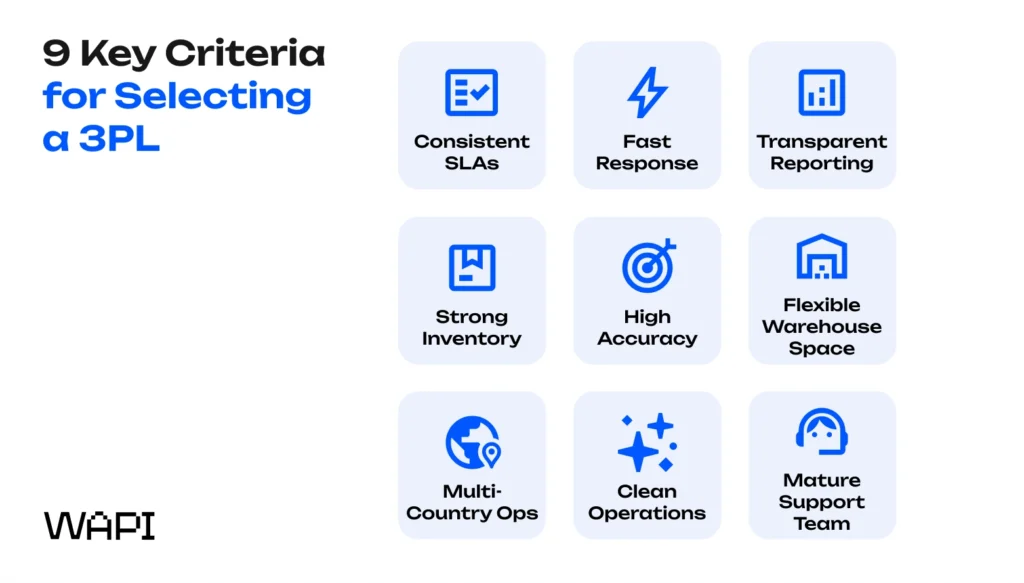
Choosing a party logistics provider is a strategic decision that affects delivery quality, stock accuracy, scalability, and customer experience. A strong 3PL must demonstrate 9 key criteria:
- Consistent SLA performance
- Fast operational response
- Transparent reporting
- Strong inventory management capabilities
- High picking accuracy
- Flexible storage and warehouse space allocation
- Experience with multi-country operations
- Clean, well-organized warehouse operations
- A mature support team
The right partner should understand not only logistics, but the brand’s business model, audience, and channel strategy.
Technology, warehouse space and fulfillment process evaluation
When evaluating a 3PL, ecommerce businesses should assess:
- warehouse locations and their proximity to key markets
- the provider’s ability to scale storage space seasonally
- automation levels in the fulfillment process
- maturity of integrations with marketplaces and online store platforms
- analytical capabilities for demand forecasting and data analytics
- real-time tracking of inventory levels
- return handling speed and reverse logistics quality
- systems for monitoring SLAs and performance
Insight: The best 3PL is not the one with the largest warehouse, but the one with the most efficient processes and data-driven decision-making capabilities.
Integration with core business and core competencies
A 3PL should reinforce (not replace!) the brand’s strategic direction.
By outsourcing company’s logistics activities, brands preserve focus on their core competencies, product strategy, creative development, and customer communication.
Strong 3PLs work as an extension of the internal team, not a detached supplier.
Misconceptions About 3PL
“Own warehouse vs 3PL” myths
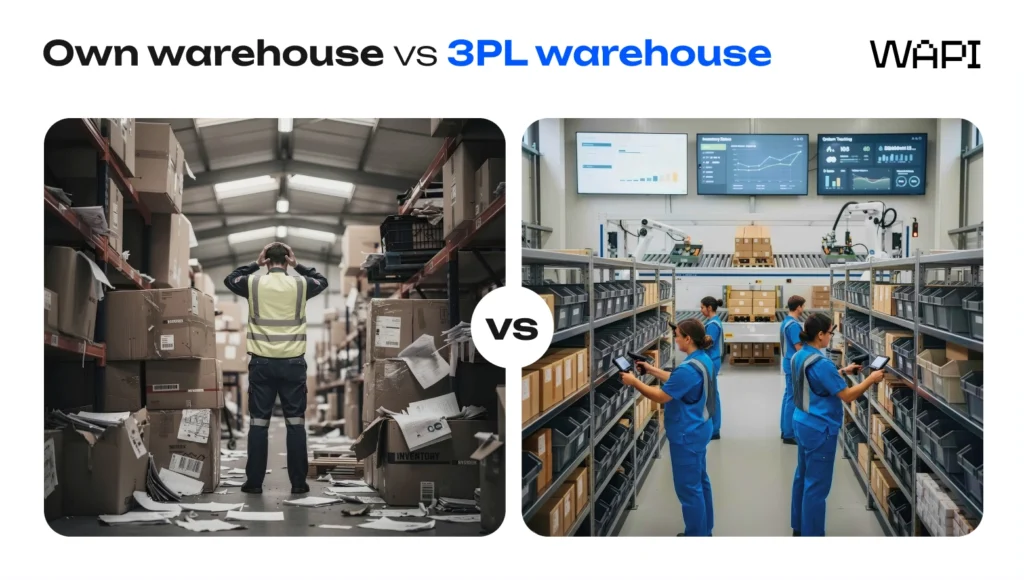
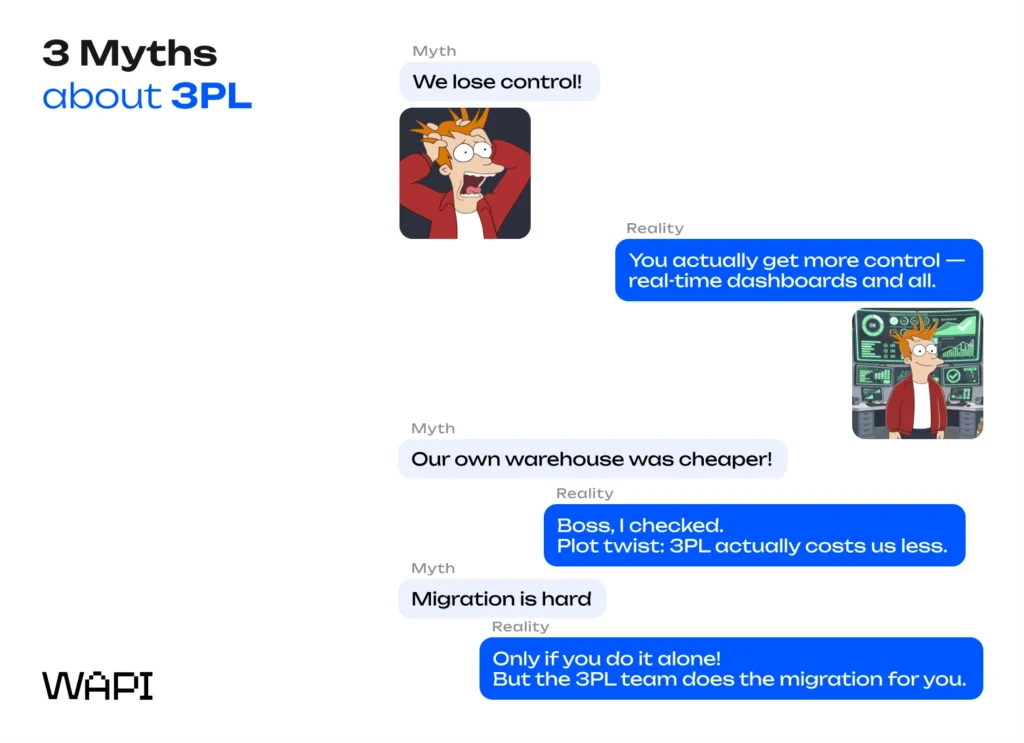
A common misconception is that using an own warehouse grants more control. In reality, internal logistics often creates operational blind spots:
- outdated processes
- slower innovation cycles
- limited error tracking
- higher personnel risks
- higher fixed costs
Meanwhile, advanced 3PLs deliver automation, visibility, and faster improvement cycles — often surpassing internal performance benchmarks.
Why outsourcing does not mean losing control
Another misconception is that outsourced logistics leads to loss of oversight.
Modern 3PLs use:
- real-time dashboards
- automated reporting
- API integrations
- live updates on returns
- predictive analytics
This creates more visibility than many internal warehouse setups.
Insight: The best 3PLs offer deeper operational transparency than most internal logistics setups could ever achieve.
Why some business owners hesitate unnecessarily
Some business owners hesitate due to fear of transition complexity.
But migration processes are fully managed by 3PL teams: from inbound scheduling to onboarding of sales channels, carrier configuration, and integration workflows.
Brands typically become fully operational within days or weeks, not months.
3PL and Cross-Border Expansion in the EU
How 3PL enables rapid market entry
A key advantage of third party logistics is the ability to enter new markets quickly by leveraging existing infrastructure.
Brands expanding into the EU or strengthening their presence often rely on structured frameworks such as German market entry to understand regulations, VAT obligations, and carrier expectations.
Because 3PLs already operate fulfillment centers across Europe, businesses can place inventory and begin shipping immediately, without investing in permanent infrastructure.
Key point: 3PL networks eliminate the need for a physical presence in every country, drastically accelerating time-to-market.
International shipping optimization using 3PL networks
3PLs manage international shipping by coordinating:
- carrier selection
- route optimization
- rate negotiation
- customs documentation
- regional delivery rules
- return routing
These processes are often handled through established freight forwarders, enabling smooth EU-wide distribution.
Brands shipping globally benefit from a 3PL’s ability to select the most efficient transport mode, balancing speed with shipping costs.
Freight forwarders and cross-border distribution
Cross-border fulfillment also relies on:
- consolidation centers
- multi-node routing
- palletized freight movements
- customs clearance partners
Forwarders coordinate long-haul routes, while 3PLs handle last-mile delivery, returns, and location-based inventory distribution.
WAPI, like other top-performing EU operators, integrates forwarder networks directly into its transportation workflows, simplifying communication for brands selling in multiple regions.
Why 3PL Is a Strategic Advantage in Modern Ecommerce
Benefits across the entire supply chain
When implemented correctly, third party logistics optimizes the entire supply chain:
- aligns stock placement with customer demand
- ensures efficient use of storage space
- reduces shipping distances
- improves delivery speed
- enables EU-wide scalability
- promotes stronger supply chain management routines
- ensures compliance with local regulations
- improves return cycles through optimized reverse logistics
- enhances accuracy of order fulfillment
This creates a more resilient and predictable logistics ecosystem.
How 3PL supports ecommerce businesses long-term
Ecommerce teams frequently face:
- seasonal spikes
- variable return rates
- rapid assortment expansion
- multi-channel complexity
- carrier performance shifts
A strong 3pl provider helps stabilize operations, reduce costs, and sustain long-term ecommerce growth.
Reliable fulfillment as a competitive advantage
In markets with high standards, especially in Northern and Western Europe, customers expect:
- accurate tracking
- fast handling
- no packing mistakes
- easy returns
- predictable delivery windows
This makes reliable fulfillment a core competitive differentiator.
3PLs that embrace automation, advanced scanning, and predictive analytics deliver consistently higher accuracy and stronger loyalty outcomes.
The Role of WAPI as a Modern EU 3PL Partner
WAPI operates as a technology-driven 3PL ecosystem designed specifically for the needs of modern ecommerce businesses.
Unlike traditional logistics service providers, WAPI implements streamlined warehouse operations, real-time system integrations, and automated workflows that improve accuracy, speed, and transparency.
WAPI’s fulfillment network supports omnichannel operations, helping brands manage inventory across marketplaces, D2C stores, and wholesale partners.
Advanced dashboards allow companies to follow their inventory levels, monitor SLA performance, and evaluate operational efficiency through clean, intuitive data.
Because WAPI functions as both a 3pl provider and a strategic partner, ecommerce businesses can adjust warehouse space, expand into new EU markets, synchronize sales channels, and leverage unified analytics — all within one coordinated platform.
Many companies choose WAPI not merely as a warehouse service, but as a long-term optimization layer across their supply chain.
Conclusion: Why WAPI Is One of the Most Reliable 3PL Choices in Europe
Selecting a 3PL is one of the most important strategic decisions for any ecommerce brand. A strong 3PL improves logistics operations, enhances customer satisfaction, reduces errors, and strengthens the entire business model. It enables long-term growth by transforming logistics from a bottleneck into a competitive advantage.
WAPI stands out among European 3PL providers because it unites:
- advanced automation and advanced technology
- high-precision order fulfillment
- scalable storage and warehouse space
- strong cross-border capabilities
- data-driven optimization
- consistent SLA performance
- seamless integrations with all major platforms
WAPI supports businesses entering new EU markets, scaling operations, reducing costs, and building a more resilient supply chain.
For ecommerce teams that want a dependable, forward-looking, transparent, and efficient logistics partner, WAPI represents one of the strongest choices in the European 3PL ecosystem.
With WAPI, logistics becomes not just a function — but a strategic engine for sustainable ecommerce growth.
Wanna get smooth pick, pack and ship services for your ecommerce business?
Contact WAPI now
 Community