
 back to list
Latin America’s second-largest online market grew 19% in 2025 to 941 billion pesos, and still asks sellers to support cash-based payment routes, from OXXO Pay to cash on delivery. Here is the Mexico ecommerce market, decoded.
Seventy-seven million Mexicans bought something online in 2025, and a large share of them still lean on cash to pay, whether through OXXO Pay or cash on delivery. Hold those two facts side by side, because together they explain most of what makes selling in this country different. Mexico runs the second-largest ecommerce market in Latin America, it has grown by double digits every year since 2020, and it rewards sellers who respect its wiring. The ones who assume it behaves like the United States or Western Europe tend to find out otherwise at checkout, and again on the delivery route.
This is a working guide to the Mexico ecommerce market as it stands in 2026: the statistics that actually matter, the features that catch newcomers off guard, the 2025 tax rules that reshaped cross-border selling, and what the numbers ask of you if you want orders to arrive and get paid for.
Mexico ecommerce market size and statistics
Ask five research firms how big Mexican ecommerce is and you will get five answers. That is not sloppiness, it is a definitional problem, made worse by a peso that swung against the dollar in 2025. Some trackers count only physical goods sold to consumers, others fold in travel, streaming, and services, and each converts pesos to dollars on its own day. Reading the market off a single headline number is like judging a city’s size from one photograph: roughly right, precisely wrong.
Start with the local authority. AMVO, the Mexican Online Sales Association, is the reference source here, and its 2026 study reports the honest anchor for the year just closed.
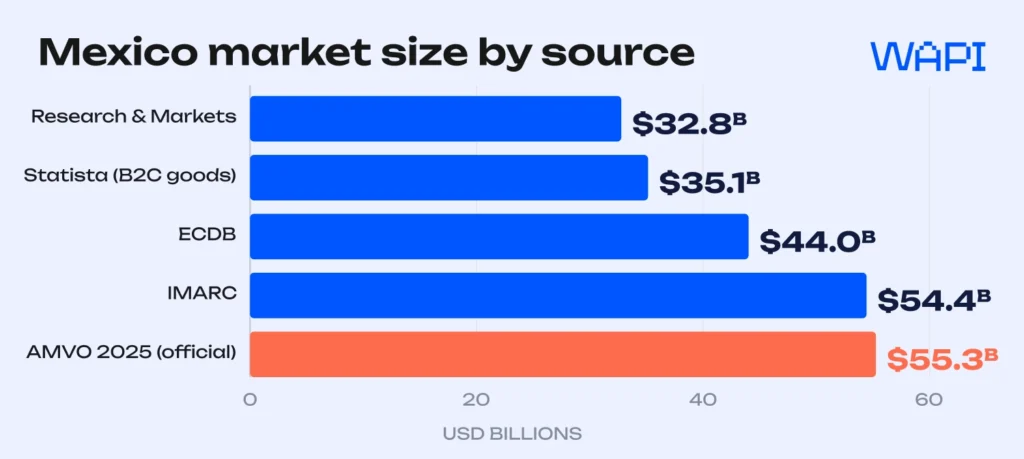
Coral bar is AMVO’s official 2025 online-retail actual (MX$941B, near US$55.3B). Narrow B2C-goods trackers like Statista and Research & Markets read lower because they exclude categories such as services and travel; AMVO counts all online retail. The spread is mostly a question of what each source measures. Sources: AMVO, Statista, ECDB, IMARC, Research & Markets.
AMVO reported 2025 online retail at MX$941 billion, close to US$55 billion once converted, up 19.2% on the prior year. That held a double-digit pace unbroken since 2020, and ran roughly 25 times faster than the wider economy grew. By the metric that travels best across borders, the share of all retail that happens online, Mexico now ranks eighth in the world at 17.7%. That is a penetration ranking, not a claim to be the eighth-largest market, and Mexico’s growth rate has pulled ahead of developed economies like the United States and Singapore. The trackers that read lower simply count less: narrow B2C-goods models such as Statista and Research & Markets land near US$33 to 35 billion, while ECDB and IMARC sit in between. Pick the definition that matches your category and ignore the noise around it.
Two things hold across every source. Mexico ranks second in Latin America behind Brazil, and the region as a whole leads the world on how fast ecommerce is taking share. And growth has not stalled: it kept its double-digit pace straight through 2025, and forecasts hold it there.
| Metric | Latest figure | Source |
|---|---|---|
| Online retail size, 2025 | MX$941B (~US$55B), +19.2% YoY | AMVO |
| Online shoppers, 2025 | 77.2 million | AMVO |
| Ecommerce share of retail | 17.7% (8th globally by share) | AMVO |
| Growth vs. the wider economy | ~25x faster than GDP | AMVO |
| Share of purchases on mobile | ~79% and rising | PCMI / Worldpay |
| Average buyer age | 39 (millennial-led) | AMVO |
| Position in Latin America | #2, behind Brazil | AMVO / Statista |
Five features of the Mexican ecommerce market that shape strategy
Before the section-by-section detail, here is the market in five lines. If your plan accounts for these, you are most of the way there.
- Mobile is the storefront. Close to four in five purchases happen on a phone, one of the highest rates in Latin America. A checkout that fights a small screen leaks money on every visit.
- Cash never left. Cards lead, but cash still held roughly a third of the country’s overall payment volume in 2025, and cash-at-store rails settle a large slice of online orders. Without a cash route, you leave orders on the table.
- Cross-border got taxed. Close to 80% of shoppers have ordered from a foreign site, but 2025–2026 rules narrowed the low-cost import advantage: a 16% VAT on foreign sellers, and new tariffs of up to 50% on many goods from countries without a trade deal.
- Trust gates the sale. Around three in four consumers hesitate to share bank details online, so anything that lets them pay on their own terms lifts conversion.
- Fulfillment is the bottleneck, not demand. Roads, distances, theft, and patchy addressing turn the last mile into the hard part of the business.
Who shops in Mexico, and where
The typical Mexican online shopper is now 39 on average and millennial-led, though the base has widened to every age group and the middle and lower-income segments keep growing. About 71% mix physical and digital channels on the way to a purchase, and they expect brands to work the same way. They research before they commit, and a 2026 wrinkle is how many now lean on AI to do it: heading into the year’s big sales, most shoppers said they would use AI tools to compare products and prices before buying. Convenience wins the repeat order. Free shipping and interest-free installments move conversion more than plain discounts do.
On platforms, traffic and sales tell different stories.
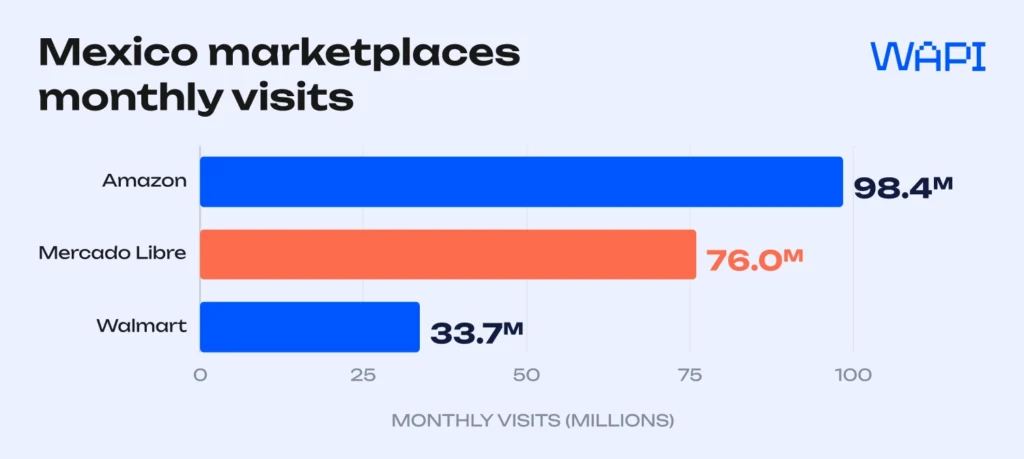
Traffic is not sales. Amazon draws the most visits, but Mercado Libre leads by revenue; together with Amazon and Shein it moves roughly 63% of Mexico’s business-to-consumer ecommerce in 2026. Shein is the most phone-driven of the group, with about 98% of its visits on mobile. Semrush revises these monthly and sale events skew them (May, which includes Hot Sale, ran higher), so read this as a dated snapshot. Sources: Semrush (April 2026), AMVO, Euromonitor.
The lesson for a seller is not “pick the biggest site.” It is “match the platform to how your buyers there actually pay and receive goods.” By AMVO’s 2025 read, fashion leads the categories, with prepared food and beauty and personal care close behind, while niche segments like pet products and auto parts are the fastest risers.
How Mexico pays online, and why cash still decides sales
This is the feature most foreign sellers underestimate. Cards do lead: roughly 79% of online shoppers reach for a debit card and about 52% use a credit card, with Visa and Mastercard covering almost the entire card market. Credit use ticked up in 2025 as shoppers chased installment perks. Digital wallets are climbing fastest of all, used by roughly a third of online shoppers; separately, more than half of Mexican smartphone owners now reach for one in everyday purchases.

Then there is cash, which refuses to behave like a legacy method on its way out. Around a fifth of digital buyers still pay in cash, and across the whole economy cash carried close to a third of payment volume in 2025, among the highest shares in the region. The cause is structural, not nostalgia. Financial access has widened, about 63% of adults now hold a formal savings account and roughly eight in ten have some financial product, but the mix stays firmly cash-first: only about 16% carry a credit card, and 85% still reach for cash on purchases under 500 pesos. Trust adds to it: AMVO found that around three in four consumers hesitate to hand over banking details online. Treating Mexico’s payment mix like Western Europe’s is like packing only for summer in a country that has a rainy season. You are fine until the day you are not.
Two mechanisms close the gap. OXXO Pay lets a shopper order online, then pay in cash at one of thousands of corner stores. Cash on delivery lets them pay the courier only once the parcel is in their hands, which answers the trust problem directly: no card details, no prepayment, inspect first. For categories where buyers want to see the product before paying, a cash-on-delivery option is the line between a browsing session and a sale.
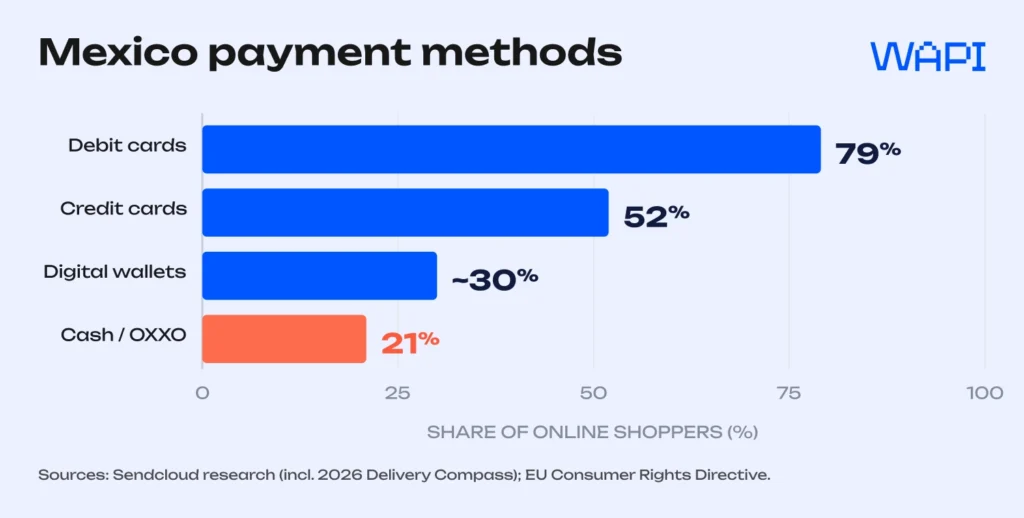
Shares do not sum to 100: a typical buyer holds several payment methods. The bars show how many shoppers reach for each. Zoom out to the whole payments market and cash still carried about 31% of value in 2025, the highest share in Latin America. Sources: AMVO, PCMI, Worldpay, Mordor Intelligence.
The cross-border pull, and the 2025–2026 rules that changed it
Mexicans shop the world. Close to 80% of online buyers have ordered from a foreign retailer, and Chinese platforms drove much of the surge. Shein, Temu, and AliExpress built large audiences on low prices and deep selection, often shipping goods that slipped under old duty thresholds.
Then the government rewrote the rules in three moves. In January 2025 it required foreign sellers and platforms, digital service providers included, to register with the tax authority and remit Mexico’s 16% VAT, the same rate charged at home; the big marketplaces now withhold it at checkout. In August 2025 it raised the duty on low-value parcels shipped through registered couriers to 33.5% when they come from countries without a trade agreement, China chief among them, while parcels from the United States and Canada kept lighter USMCA treatment. Then, on January 1, 2026, a broader tariff reform took effect: new duties of 5% to 50% on more than 1,400 categories of imported goods from non-treaty countries, with clothing and textiles landing around 25% to 35% and some household items as high as 50%. Computers and phones stay exempt under a technology agreement but still owe the 16% VAT.
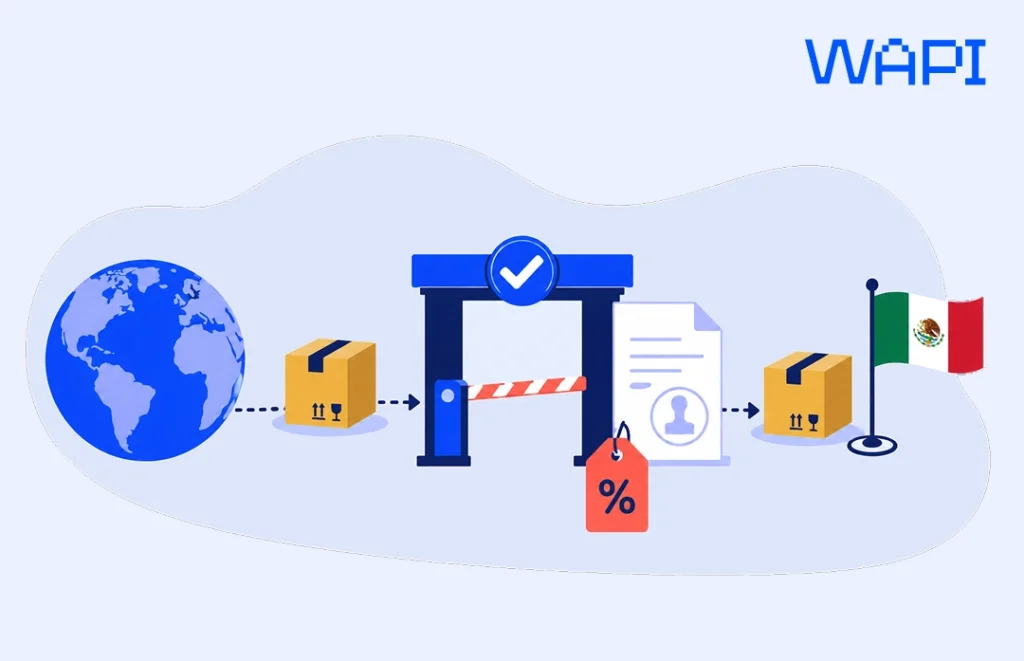
Two things follow for a foreign brand. The cheap-import advantage has narrowed sharply: if every order crosses the border, a tax now rides on each one, and the government expects the change to raise tens of billions of pesos. But origin matters more than it used to. Goods that qualify as made in the United States, Canada, or the European Union can often enter at preferential or zero tariffs with the right documentation, an edge that Chinese-origin sellers no longer have. So price the 16% VAT in, know which tariff band your goods fall into, plan cross-border logistics so customs handling does not quietly add a week to every delivery, and consider sidestepping the per-parcel math altogether by holding stock inside the country. That last option is where the next section points.
The last mile is where Mexican ecommerce gets hard
Demand is the easy part. Getting a box to a door, on time and intact, is where margin goes to die.
>50%
of delivery cost sits in the last mile alone
35%
of Mexican roads rated in good condition
>70%
abandon the cart when shipping is slow or costly
Geography does most of the damage. Only about 35% of Mexican roads rate as being in good condition, and the last mile alone can swallow more than half of total delivery cost. In Mexico the last mile behaves less like a straight line than like the final switchback on a mountain road: short in distance, long in everything that can go wrong. Congestion clogs Mexico City, Guadalajara, and Monterrey. Addressing turns inconsistent outside the main grids. Cargo theft on certain corridors, with Jalisco and Veracruz among the hotspots, pushes carriers to raise insurance and stretch delivery promises.
Shoppers have no patience for the fallout. More than 70% abandon the cart the moment shipping looks slow or expensive. Peak events amplify all of it. Hot Sale, the country’s largest online sale, ran to a projected MX$47 to 52 billion in 2026, with orders in the opening days up roughly half on the prior year and about 95% of them shipped to the door. Buen Fin, the bigger November event, pushed online sales up 31% in 2025. When that much volume lands at once, couriers and return centers strain, and in 2026 the Hot Sale return wave collided with the start of the World Cup nine days later.
| Friction point | Why it happens | What it costs |
|---|---|---|
| Slow, pricey delivery | Poor roads, congestion in CDMX, Guadalajara, Monterrey, patchy addressing | 70%+ cart abandonment |
| Cargo theft on routes | Hotspots on certain corridors (Jalisco, Veracruz) | Higher insurance, longer promises, lost trust |
| Low card penetration | Only ~16% hold a credit card; ~75% wary of sharing bank data online | Lost checkouts unless you offer cash or COD |
| Import, VAT & tariffs | 16% VAT on foreign sellers since 2025; new 5–50% import tariffs from Jan 2026 on non-treaty goods | Customs delays, higher prices, tighter margins |
| Seasonal surges | Buen Fin and Hot Sale spikes (Hot Sale orders up about 50% YoY in 2026) | Warehouse overloads, missed delivery windows |
The structural fix is not a faster truck. It is putting inventory closer to the buyer. When stock already sits in a warehouse near the customer, the delivery gets shorter, cheaper, and far easier to control, and last-mile delivery stops being the part of the operation that keeps you up at night.
Demand is not the hard part in Mexico. Fulfillment is.

Selling into Mexico: what the numbers ask of you
Put the findings together and a short operating checklist falls out.
- Build the mobile checkout first, not last.
- Offer at least one cash route, OXXO Pay or cash on delivery, before you assume cards are enough.
- Price the 16% VAT in, check your tariff band, and treat customs handling as part of your delivery timeline.
- Use your origin. If you ship from the US, Canada, or the EU, trade-agreement rules can mean preferential or zero tariffs that Chinese-origin rivals no longer get.
- Hold stock in-country. A local presence turns a multi-week cross-border shipment into a one-to-three-day domestic delivery in the main metros.
- Plan for peaks. Buen Fin and Hot Sale reward sellers whose fulfillment can absorb a doubling of volume without breaking.
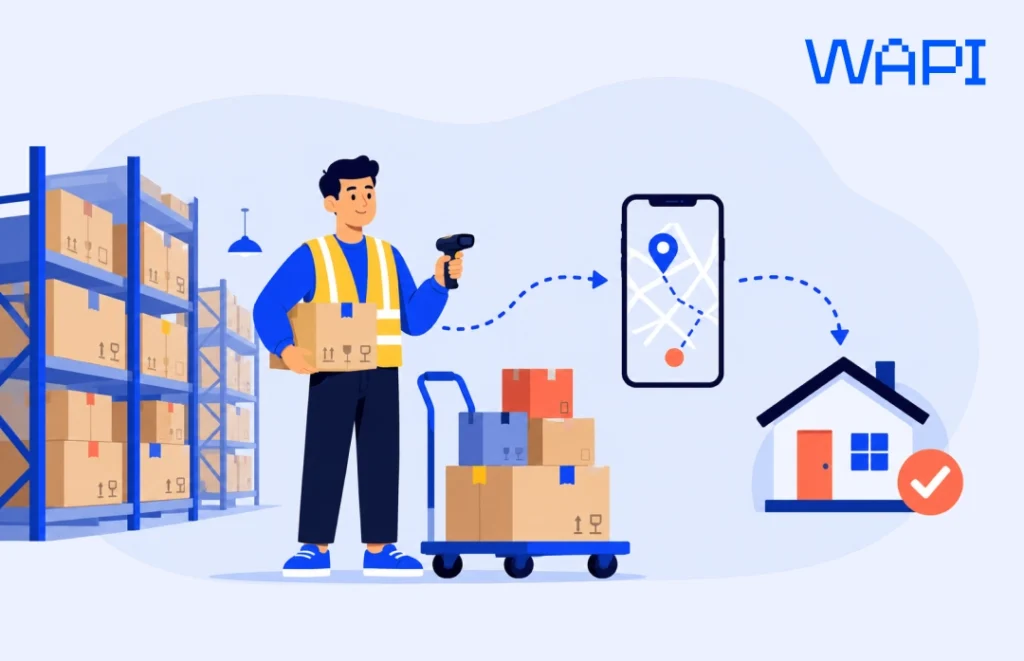
The last two points are where most foreign brands stall, because running a warehouse, a returns process, and customs compliance in Mexico from abroad is slow and expensive. That is the case for a local partner. WAPI operates a fulfillment warehouse in Mexico in Mexico City that stores your stock, ships across the country, handles returns, supports cash on delivery, and advises on the import side, all on the same platform it runs across Europe and the UK. You focus on selling; the operational layer sits underneath.
Weighing a move into Mexico?
Contact WAPI now
Whether you are entering the market or fixing an operation that leaks margin on delivery and declined payments, map it out before your next peak season. Send your markets, volume, and category, and WAPI replies with coverage and pricing, usually within one business day.
Frequently asked questions
How big is Mexico’s ecommerce market?
The clearest anchor is AMVO, the local trade association. Its 2026 study put 2025 online retail at MX$941 billion, close to US$55 billion once converted, up 19.2% year over year, with 77.2 million online shoppers. Ecommerce now makes up 17.7% of all retail sales in Mexico, which ranks the country eighth in the world by that measure.
Other trackers land anywhere from roughly US$33 billion to US$55 billion depending on what they count, from narrower B2C-goods models to broader online-retail measures. Whichever figure you use, the direction is the same. Mexico is the second-largest ecommerce market in Latin America after Brazil, and it has grown by double digits every year since 2020.
What are the most popular online payment methods in Mexico?
Cards lead: about 79% of online shoppers use a debit card and 52% use a credit card, with Visa and Mastercard covering almost the entire card market. Digital wallets such as Mercado Pago, PayPal, and bank apps are the fastest-growing group and now carry close to a third of online payment value; more than half of Mexican smartphone owners use one for everyday purchases.
Cash remains a fixture. Around a fifth of digital buyers still pay in cash, and cash-at-store systems like OXXO Pay account for close to a quarter of online transactions. Buy-now-pay-later options are climbing fast, and interest-free installments and free shipping still move conversion more than almost anything else.
Why do so many Mexican shoppers still pay with cash?
Two reasons. First, cards are not universal: about 63% of adults hold a formal savings account, but only around 16% carry a credit card, and 85% still pay cash on small purchases. Second, trust: AMVO found that about three in four consumers hesitate to share banking details online.
OXXO Pay lets shoppers order online and pay in cash at a corner store, and cash on delivery lets them pay only once the parcel is in hand. For sellers, offering a cash route is not a nice-to-have. Skip it and you lose orders you already earned.
Which are the largest ecommerce marketplaces in Mexico?
By web traffic in April 2026, Amazon leads with about 98 million monthly visits, followed by Mercado Libre (around 76 million) and Walmart (around 34 million); Shein and AliExpress round out the most-visited group, with Shein almost entirely mobile. Traffic and sales are not the same thing: by revenue, Mercado Libre sits at the top, and together with Amazon and Shein it moves roughly 63% of Mexico’s business-to-consumer ecommerce in 2026. Coppel and Liverpool anchor the domestic department-store side.
Do Mexican consumers buy from international websites?
Heavily. Close to 80% of Mexican online shoppers have bought from a foreign retailer, with Chinese platforms such as Shein, Temu, and AliExpress driving much of it.
The rules tightened in stages. Since January 2025, foreign sellers must register for and remit Mexico’s 16% VAT. In August 2025 the duty on low-value parcels from non-treaty countries rose to 33.5%. And from January 2026, a broader reform added import tariffs of 5% to 50% on more than 1,400 categories of goods from countries without a trade agreement, with clothing and textiles around 25% to 35%. Goods from the US, Canada, or the EU can still qualify for preferential or zero tariffs with the right paperwork.
What are the biggest challenges of selling online in Mexico?
Logistics first. The last mile can eat more than half of delivery cost, only about 35% of roads rate as good, and cargo theft on certain corridors (Jalisco and Veracruz among them) raises insurance and lengthens delivery promises. Addressing is inconsistent, and congestion in Mexico City, Guadalajara, and Monterrey slows drops.
Add the payment gap (offer cash or lose sales) and import compliance, and the pattern is clear: demand is not the hard part in Mexico, fulfillment is.
Do foreign sellers have to pay VAT in Mexico?
Yes, and there is now more than VAT to plan for. Since January 1, 2025, foreign ecommerce businesses selling to Mexican consumers must register for and remit a 16% VAT, and platforms withhold tax from sellers who operate through them. On top of that, a tariff reform effective January 1, 2026 added import duties of 5% to 50% on more than 1,400 categories of goods from countries without a trade agreement with Mexico, with apparel and textiles around 25% to 35%. Build the 16% VAT into your pricing, confirm your tariff band, and remember that goods of US, Canadian, or EU origin can often enter at preferential or zero tariffs with correct documentation.
Does WAPI have a fulfillment warehouse in Mexico?
Yes. WAPI runs a central fulfillment warehouse in Mexico City that stores your stock locally and ships across the country: about 1 to 3 days.
It handles supplements, cosmetics, consumer electronics, and general consumer goods, with secure and temperature-controlled storage for sensitive items, plus picking, packing, returns, and value-added work such as kitting and relabeling. The Mexico hub sits inside WAPI’s wider network of 16+ warehouses across Mexico, Europe, and the UK, all run through one system.
Does WAPI offer cash on delivery (COD) in Mexico?
Yes. Given how much of the Mexican market still settles in cash, COD is one of the more useful things WAPI supports there. Cash on delivery in Mexico runs from the same Mexico City warehouse, on the same platform and contract as WAPI’s COD network across 19 markets.
The model is margin-based with weekly payouts and no per-order commission, and real-time courier signals give your team a recovery window on failed or refused deliveries. Buyout depends on your offer, vertical, and call-center recovery, so WAPI shares market-specific rates on request rather than promising a number up front.
How does WAPI handle customs, import taxes, and returns in Mexico?
WAPI helps brands navigate Mexican customs and trade-compliance matters and advises on import taxes, including the 16% VAT and the import tariffs introduced in 2026, so stock clears and reaches your local warehouse without avoidable surprises. Holding inventory in-country also sidesteps the per-parcel duty math and gives your prices more stability than shipping each order across the border. On the back end, returns come to one place through a clear reverse-logistics process, which matters in a market where shoppers weigh return convenience heavily before they buy.
WAPI’s Mexico service focuses on domestic delivery within the country, run on the same fulfillment software as the rest of its network across Europe and the UK.
Sources
Market size and shopper data: AMVO (Estudio de Venta Online 2026 and Hot Sale reporting), cross-checked against Statista, ECDB, IMARC, and Research & Markets
Financial access and payments: INEGI ENIF 2024, with PCMI, Worldpay, and Mordor Intelligence.
Tax and tariffs: White & Case and Mexico’s Secretaria de Economia / Diario Oficial de la Federacion. Marketplace traffic: Semrush (dated snapshot; figures revised monthly).
WAPI service details from wapi.com
Figures reflect 2025–2026 reporting; market-size ranges reflect differing methodologies. Prepared as a market brief for the WAPI blog.

Keep in touch with WAPI!
Get free ecommerce tips, news, webinars and other stuff.
 Community