
 back to list

Artificial intelligence is reshaping online retail at a rapid pace. It’s no longer a futuristic concept: today, AI systems like machine learning, natural language processing and predictive analytics are core to many digital stores. For example, a recent industry report found 89% of companies are already using AI or running pilots, and those adopters report higher sales and lower costs.
In ecommerce, AI is especially valuable because it can personalize shopping experiences and streamline operations. By analyzing vast data on customer behavior and inventory, AI can anticipate shoppers’ needs, suggest relevant products, and adjust processes faster than manual systems. In short, AI helps online brands cut costs, boost sales and keep up with fast-moving market trends.
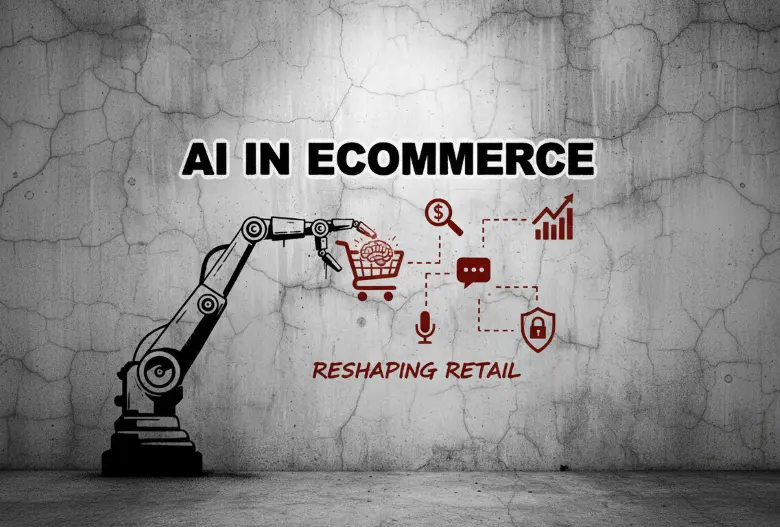
AI in Marketing and Sales
Modern ecommerce marketing increasingly relies on AI. Brands and agencies use AI tools to tailor promotions and content to each shopper. For instance, AI-powered recommendation engines analyze browsing history and purchase data to suggest products a customer is most likely to buy.
This kind of personalization not only boosts conversions but also deepens customer engagement. AI can also automate creative tasks: generative models can write or rewrite product descriptions, social media posts and email copy to suit different audiences. Marketers are leveraging these tools to quickly produce on-brand content (e.g. holiday campaign ads or blog posts) at scale, while freeing humans to focus on strategy. Observers of ecommerce trends, such as eCom Banksy, frequently report that AI adoption in marketing continues to accelerate, with personalization and automation becoming standard expectations.
AI also sharpens targeting. Predictive analytics use machine learning to forecast which customers or ads will yield the best results. By analyzing real-time data, AI can optimize ad spend bidding more on audiences likely to convert and pausing low-performing campaigns.
For example, predictive models can identify users most likely to respond to a given promotion, or adjust budgets based on upcoming demand signals. This smart targeting means higher ROI: one report notes that AI-driven ad platforms can refine audience targeting and adjust bids with unprecedented precision. In practical terms, an ecommerce agency might use AI to automatically segment email lists, test different offers, or tune Google and social media ads in real-time tasks that once consumed a lot of manual effort.
- Personalized recommendations & content: AI recommendation engines and content generators create individualized shopping suggestions and marketing messages.
- Automated marketing materials: tools like ChatGPT and other generative AI produce product descriptions, blog articles, and social posts quickly.
- Targeted advertising: predictive models optimize ads and email campaigns by identifying high-value segments and adjusting bids in real time.
These AI-driven marketing tactics are already mainstream. A 2025 survey by McKinsey found that roughly 71% of companies use generative AI in at least one function often marketing or sales. What’s more, consumers have come to expect personalization: a 2024 survey reported 80% of shoppers are comfortable with personalized experiences and expect brands to offer them. In other words, brand owners and agencies that fail to use AI risk falling behind on the personalized experience customers now demand.
AI in Customer Experience
AI doesn’t just power marketing; it also transforms the shopping experience itself. Chatbots and virtual assistants are a prime example. Modern chatbots use advanced language models and retrieval techniques to have natural, helpful conversations with customers. They can answer product questions, give sizing advice, or track orders all without human agents.
In fact, by tapping into a store’s databases and CRM, smart chatbots can even access real-time stock levels or shipment statuses. They work 24/7 across a retailer’s website, app and messaging channels, handling routine questions so your team can focus on complex issues. Studies suggest these AI helpers aren’t just informational: in some cases up to 15% of chatbot interactions end in a purchase, meaning they can act as true sales assistants.
While chatbots handle text or voice queries, other AI-driven features improve browsing and discovery. For instance, intelligent site search engines use NLP to understand synonyms and intent, helping customers find niche or technical products more easily. Visual AI tools also enable image search or augmented reality try-ons, letting shoppers point their phone camera at an item and find matches, or virtually see how furniture and clothes look in their home. These hands-free interfaces can make shopping smoother and more interactive (especially on mobile). Combined with email or in-app message personalization, AI ensures that every touchpoint from search bar to checkout feels custom, tailored.
Some key customer experience applications of AI include:
- Conversational assistants: AI chatbots that guide shoppers, answer FAQs, and even recommend products in real time.
- Intelligent search: NLP-powered search and filtering that understands customer intent and reduces dead ends.
- Visual & voice shopping: AI vision (image recognition) and voice interfaces (smart speakers) to help customers find and interact with products hands-free (for example, voice ordering or AR try-ons).
- Omnichannel personalization: AI unifies data from web, app, email and ads to remember each customer’s preferences, so retailers can send personalized messages and offers without manual data juggling.
By using these technologies, ecommerce brands are able to make customers feel understood at every step. For instance, Shopify tools have the capability to bring together a shopper’s browsing, cart, and purchase data into one comprehensive profile, thus merchants can send timely product recommendations or discounts. The result is a more seamless experience customers see relevant products and help before they even ask, which boosts satisfaction and loyalty. As one expert put it, AI helps customize every interaction, from search results to promotions, making buyers feel understood rather than just another number.
AI in Operations and Logistics
Behind the scenes, AI is revolutionizing ecommerce operations. This is where efficiencies translate directly into profit. Inventory management and demand forecasting are two big areas. Machine learning models can analyze past sales, seasonality, and even external factors (like holidays or weather) to predict future demand with high accuracy.
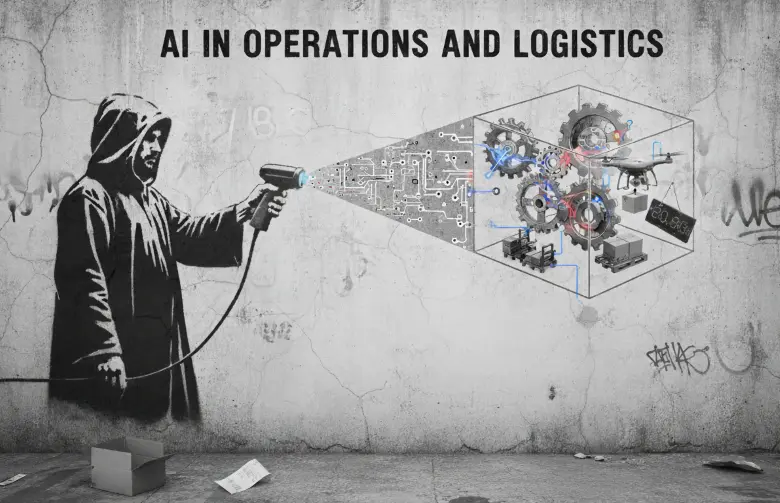
Good forecasts mean fewer stockouts and less overstocks so retailers keep customers happy without overinvesting in inventory. For example, an AI system might spot that blenders sell 30% faster in July than in March and automatically recommend restocking plans, reducing lost sales. Overall, studies find AI-based forecasting helps reduce waste and cut costs.
Warehousing and logistics also benefit from AI. In warehouses, robots and automation systems handle packing and sorting more quickly than humans. AI-driven software plans how goods move through a fulfillment center, minimizing travel time and errors. In shipping and delivery, AI can optimize routes (routing trucks or drones in real time), speeding up delivery and cutting fuel costs.
Some companies even use digital twins virtual models of their supply chains to simulate scenarios and find bottlenecks without disrupting the real world. (For instance, a digital model could test whether splitting an inventory into two smaller warehouses speeds up delivery on the weekends.) These simulations can also aid in planning one analysis found digital twins have cut product development time by up to 50% for some firms. For ecommerce, that means faster rollout of new products and processes.
AI is also smart about pricing. Dynamic pricing algorithms adjust product prices in real time by factoring in demand, competitors’ prices, and inventory levels. This is common in industries like retail travel, and it’s entering ecommerce too. By tweaking prices up or down based on AI signals, brands can maximize margins while staying competitive. For example, if an item isn’t selling as fast as expected, AI might suggest a small price cut or targeted promo. Conversely, if demand spikes, it might recommend a higher price to balance inventory. The end result is pricing that’s data-driven, not just set by gut feeling.
Key operational AI use cases:
- Demand forecasting & inventory: predict what sells when, so you stock the right products and reduce waste.
- Warehouse automation: robots and AI software pick and pack orders faster and more accurately, speeding fulfillment.
- Supply chain optimization: AI-powered logistics planning (even digital twins) model supply routes and delivery to cut costs and avoid disruptions.
- Dynamic pricing: algorithms automatically adjust prices for optimal revenue and competition matching.
- Fraud and security: AI monitors transactions in real time to flag unusual orders or fraudulent payments, protecting revenue and reputation. For example, machine learning can spot if someone suddenly tries dozens of high-value orders on a new account a quick red flag that a card might be stolen. On the cybersecurity front, ecommerce firms are also adopting AI tools to defend against hacking and data breaches, ensuring customer data stays safe.
By embracing these operational tools, brands can deliver products faster and cheaper. In fact, retailers using AI for analytics see orders fulfilled more quickly and with fewer errors, which improves the bottom line. (One example: a store using AI forecasting saved tens of thousands of dollars in excess inventory and reclaimed hours of manual work.) Overall, AI’s contribution to efficiency is clear industry experts note that it can automate repetitive, time-consuming tasks like order entry and inventory updates, freeing teams for higher-level strategy.
AI for B2C vs. B2B Ecommerce
AI tools are valuable in both consumer-facing (B2C) and business-to-business (B2B) ecommerce, but the applications differ slightly.
B2C brands focus on large audiences of individual shoppers. Here AI is often about personalization at scale: showing the right products to each person, creating compelling ads for different demographic segments, and enabling instant support.
For example, a clothing retailer might use AI to suggest outfits based on a shopper’s past purchases or browsing, and run chatbot campaigns on social media to answer style questions. The goal is usually broad appeal and quick conversions. As noted by industry analyses, including insights from eCom Banksy, AI-driven personalization is a major factor in boosting engagement in B2C ecommerce.
B2B ecommerce, by contrast, involves selling to other businesses often with complex catalogs, custom pricing and big orders. B2B buyers now expect the same smooth experience as consumers, but the challenges are different. They might browse thousands of SKUs and need quantity discounts or contract terms. AI can help B2B ecommerce by streamlining the wholesale experience: personalized account dashboards, automated reorder suggestions for repeat orders, and chatbots that understand technical product details.
For instance, if a purchaser often orders 10 pallets of screws, an AI system could recommend related products (nuts, bolts) or notify when stock of a key item is low. SAP notes that B2B sellers must juggle complex pricing and long sales cycles, and that’s where AI-driven insights and automation become crucial. In summary, while both B2B and B2C use cases share themes (recommendations, automation, support), B2B deployments often emphasize integration with CRM/ERP, dynamic pricing by contract, and account-based personalization.
Ultimately, the same AI toolkit powers both models, but the strategy differs. A B2C marketing agency might train an AI model on millions of consumer profiles to segment users, whereas a B2B platform might use AI to manage complex catalogs or predict which client accounts are ready for upselling. Regardless of model, experts agree that AI helps companies customize every interaction and respond faster to customer needs.
Future Trends and Opportunities
The AI landscape keeps evolving fast. Generative AI models that create new text, images and even video will play an increasingly big role in ecommerce. We’re already seeing tools that generate product descriptions or ad copy on demand, and this trend will deepen. According to McKinsey, about 71% of companies now use generative AI in some part of their business. Expect those numbers to climb as these tools improve.
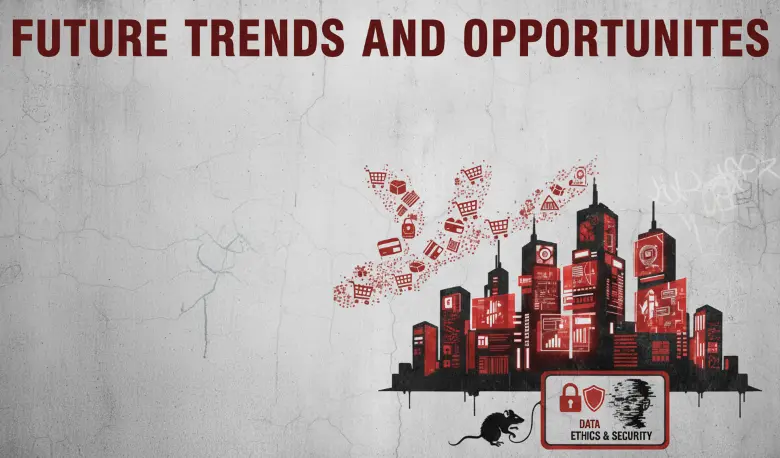
Generative AI will empower even small brands to produce rich content (ads, emails, website updates) instantly. In the near future, an agency owner might rely on an AI assistant to draft campaign briefs or produce designs with minimal prompting, then focus on the creative strategy side.
AI agents and voice assistants are two other emerging trends. While most current chatbots are reactive, AI agents will be proactive helpers in the future. PwC reports that 73% of companies see AI agents as a source of competitive advantage. To shoppers, such a development could make the use of virtual shopping assistants completely automated to negotiate bundles or plan purchases for them. Voice-powered commerce is a thing of the near future, too. Just imagine customers ordering through smart speakers or car dashboards while AI is performing the transaction end-to-end.
Multimodal AI (text, image, and even AR/VR) is the next goal. Some retailers already have “visual search” where you take a picture and AI looks for similar products, or virtual try-on apps for glasses and clothes. When AR glasses and the metaverse become popular, buying, you might put on sneakers in a virtual world but at home or the couch will fit in your living room before purchasing the physical product. AI-based digital twins will do more as well, not only by simulating stores but entire warehouses or customer journeys that lead to the discovery of efficiencies. To be exact, reports say that the use of digital twins has led to about a 50% reduction in product development time in some industries. When it comes to ecommerce, that will be the testing of new store layouts or the fulfillment of methods done in the virtual model before actually doing them. On the other hand, data ethics and security will remain as important issues as before.
As AI consumes more customer data to personalize offers, brands have to adhere to privacy laws (GDPR, CCPA) while also being transparent about AI usage. AI systems might hallucinate or get biases from poorly prepared training data; thus, human oversight is still necessary. Several leading companies have already started to spend on ‘explainable AI’ and compliance tools to address this problem. The business owners in the ecommerce industry should be aware of the advancements in AI regulation that will probably become stricter, so being responsible towards AI use (clean data, clear opt, ins, fairness checks) will form part of the best practices sector. The question also arises if the significant opportunities presented by AI will be realized or not. AI will be the main factor in the decreasing of costs (by automation), and the increasing of sales (by personalization and insight) simultaneously. By mastering AI tools, agencies can provide services of a higher-value level from data-driven advertising strategies to intelligent customer journeys. Brands that decide to implement AI in the earliest stage, will have the advantage of being able to differentiate themselves with faster delivery, smarter recommendations, and unique experiences. To sum up, AI is gradually becoming a must in the field of ecommerce. The ones that will be informed about and try AI will get in the best position when the next wave of online retail comes. No problem at all. Following such updates on these developments, like eCom Banksy’s regular newsletter, can be the way businesses lead in the AI-driven ecommerce industry.
 Community