
 back to list

When people talk about ecommerce trends 2026, they often focus on shiny tools, new platforms, or the latest AI headline. But for B2B sellers, the real shift is much more practical. The most important ecommerce trends in 2026 are the ones that help a business improve discovery, conversion, fulfillment, and long-term revenue.
That is why the conversation around ecommerce feels different now. The market is still active, ecommerce sales and online sales are still rising, and many companies still expect digital channels to drive future growth. But in a more crowded growing market, the winners will be the brands that run a stronger operation, not just the brands that get more attention.

Growth is still there, but it is harder to capture
The overall direction is still positive. Online shopping remains part of everyday shopping behavior, and the long-term rise of digital commerce is not slowing down. At the same time, stronger competition means growth is becoming more selective, and the easiest gains are gone.
For B2B teams, that changes how these trends should be read. It is not enough to ask what is new. The better question is which changes help a company protect sales, improve customer satisfaction, and build a clear competitive advantage.
For B2B teams, that changes how these trends should be read. It is not enough to ask what is new. The better question is which changes help a company protect sales, improve customer satisfaction, and build a clear competitive advantage — especially when you are still figuring out how to start an ecommerce business properly.
Here are the shifts that matter most right now:
- Discovery is spreading across AI tools, marketplaces, search results, and social media
- Conversion depends more on trust, delivery confidence, and payment options
- Post-purchase performance now affects retention almost as much as acquisition
- Operational quality is becoming part of the brand promise
Artificial intelligence is changing how buyers discover products
One of the biggest digital commerce trends is the growing role of artificial intelligence in product discovery. Buyers are no longer moving only from keyword to website. Many now use tools to compare options, summarize offers, and narrow choices before they reach a product page.
In practice, we already see how this changes behavior: buyers come to sites more prepared, with fewer but more specific questions. This is where generative AI becomes a real commercial factor. It changes how people move through search results, how they evaluate product descriptions, and how they begin the path to purchase.
This shift also puts more pressure on product pages themselves. Brands that invest in building product pages that actually convert are better positioned when buyers arrive already informed.
The rise of agentic commerce
The rise of agentic commerce is one of the clearest signs of where the future is going. In simple terms, it means AI agents are moving closer to action. Instead of only answering questions, they can compare products, organize options, and guide buyers much closer to the moment of decision.
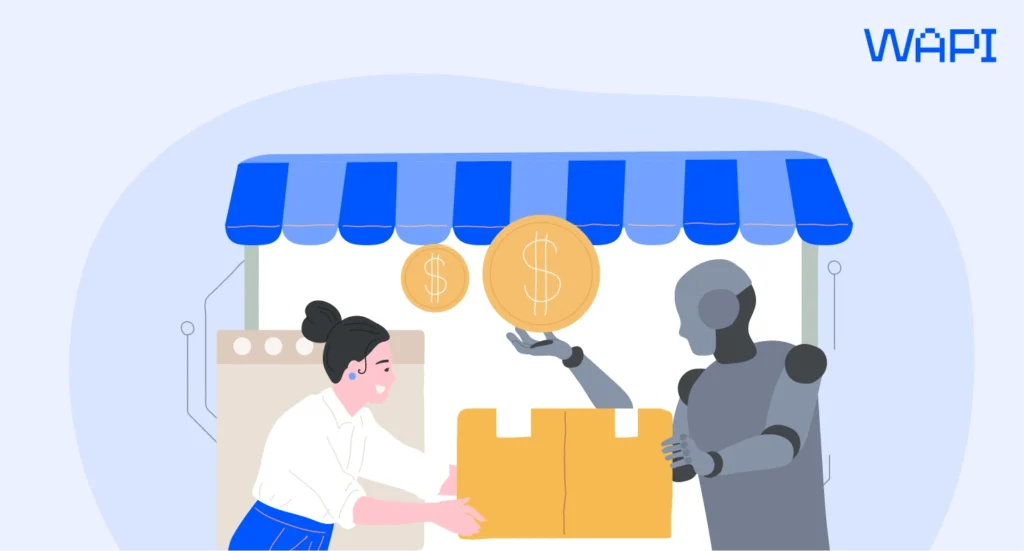
Working with ecommerce brands, we increasingly see how expectations are shifting. Buyers want faster comparisons, clearer answers, and fewer steps between interest and purchase. That is exactly where agentic commerce starts to reshape the journey.
This does not remove the human experience from ecommerce. In B2B, trust, clarity, and service still matter, and that will remain true in the next era. But it does mean that brands need stronger data, clearer offers, and better systems behind the scenes if they want to stay ahead.
Key Point: AI changes discovery, but it only works well when the business behind it is structured. The best AI technology does not hide problems — it makes a strong system easier to use.
Product data is now core infrastructure
In 2026, product data is no longer a background task. It affects visibility, conversion, returns, warehouse accuracy, and customer trust at the same time. That is why leading brands treat it as infrastructure, not admin.
We often see that improving product data alone can fix multiple issues at once — from incorrect listings to returns caused by mismatched expectations. Structured data plays a key role here. It helps products move cleanly across marketplaces, feeds, online stores, and internal systems.
Every SKU needs a digital birth certificate mindset
A useful way to think about this is that every SKU needs something like a digital birth certificate. That means one reliable record that defines what the product is, how it should be handled, and where it can be sold.
In real operations, missing or inconsistent product data quickly turns into delays, errors, and support load. This becomes critical in categories that depend on sourcing and compliance. If a company cannot explain raw materials or product specifics clearly, it becomes harder to scale.
A strong product record should include:
- Core attributes, variants, and product descriptions
- Packaging rules, storage needs, and shipping limits
- Sourcing details and raw materials where relevant
- Market-specific compliance information
- Return logic across the entire lifecycle
Unified commerce is replacing disconnected systems
Many businesses still talk about omnichannel, but unified commerce is a more accurate model for 2026. It means inventory, orders, payments, and service all operate from a shared system of truth.
From an operational point of view, disconnected systems are one of the most common causes of friction. This is why companies invest in end-to-end ecommerce supply chain management, connecting inventory, logistics, and customer-facing systems into one flow.
Customer relationship management must connect to operations
Customer relationship management cannot be limited to email flows and account notes anymore. It must connect with orders, refunds, service history, and delivery data to give teams a full picture.
In practice, this is where many businesses unlock faster support and better customer experiences. When teams have full context, they solve issues quicker and reduce friction before it impacts brand loyalty.
Real time visibility is now part of the promise
Inventory accuracy used to sound like an internal topic. In 2026, real time inventory visibility and real time visibility are part of the offer the brand makes to the buyer. If stock levels are wrong, delivery promises are wrong too, and trust disappears fast.
This is closely tied to how companies approach inventory replenishment and stock planning. When inventory, service, and fulfillment all reflect the same reality, customers feel more confident. When they do not, the business looks unreliable.
A strong unified commerce model should connect:
- Customer relationship management and support history
- Inventory, warehouse activity, and order status
- Payments, refunds, and finance signals
- Merchandising across channels and online stores
- Post-purchase communication and service workflows
Content is getting closer to the moment of sale
Content creation is no longer only about awareness. In 2026, it directly influences product discovery and decision-making.
This is especially visible in social commerce. Buyers often validate brands before purchase, which makes content part of the sales system. At the same time, brands need to combine this with strong marketplace SEO and visibility strategies, so content can actually be found in the first place.
User generated content still reduces doubt
User generated content remains powerful because it shows real outcomes. It helps buyers understand how products and services perform outside of controlled brand messaging.
In B2B, this often means case studies, reviews, or client feedback. We consistently see that this type of proof improves customer satisfaction and supports stronger brand loyalty over time.

Online advertising has to work harder than before
As discovery becomes more fragmented, online advertising and digital advertising cannot do the job alone. A paid campaign may bring attention, but if the offer is unclear or the operation behind it is weak, that traffic becomes expensive very fast. In other words, ad performance now depends more heavily on what happens after the click.
This is why stronger teams connect media work to product quality, fulfillment quality, and conversion quality. Ads are still important, but they work best when the rest of the strategy is solid. In 2026, visibility and execution have to support each other.
Conversational commerce is becoming normal
Conversational commerce is growing because buyers expect faster answers. They want to ask questions in natural language, get a clear response, and move on. That applies to AI assistants, site search, support tools, and even the way buyers interact with product pages.
The most effective systems support this by combining AI with real product data and operational logic. When done well, they help customers complete purchases more confidently.
Insight: the goal is not to sound intelligent, but to reduce effort and make buying easier.
Checkout is now a growth lever
Checkout is one of the most sensitive parts of the journey. Small issues here have a direct impact on revenue.
In our experience, even small changes — like clearer delivery costs or better payment options — can noticeably improve conversion. This is also where invisible payments reduce friction and make the process smoother.
5 things strong checkout teams review first:
- Which payment options fit each market and buyer type
- Whether buyers can complete purchases on mobile without friction
- When shipping costs appear and how clearly they are explained
- How fraud controls affect conversion
- How refund and return rules are shown near checkout

Physical retail still matters
A lot of forecasts talk as if digital growth automatically weakens stores. In reality, physical retail still shapes trust, product evaluation, and final decisions in many categories. Physical stores are still part of the wider commerce system, even when the business is strongly digital.
Many people move between channels without thinking much about it. They research online, validate in store, or start in a store and finish later on a website. That is why smart companies do not treat offline and online as separate worlds.
Stores now support the wider supply chain
The role of the store is changing as well. It is not only a place to display products. It can also support pickup, exchanges, returns, and local trust, which makes it part of the wider supply chain.
This matters because what happens in store now affects digital performance too. When stores, warehouses, and customer service are aligned, the business becomes easier to trust. That is good for both conversion and long-term retention.
Fulfillment is now part of the sales argument
For B2B sellers, one of the most practical current ecommerce trends is the growing visibility of fulfillment. Reliable shipping is no longer a back-office topic. It affects conversion, trust, repeat orders, and the way the customer judges the whole brand.
This is where operations become visible to the buyer. If tracking is weak, if claims are slow, or if promised delivery windows are missed, the issue moves straight into the customer relationship.
Working with ecommerce brands, we see this consistently: delivery issues are one of the fastest ways to lose customer trust. In many cases, around two thirds of the overall experience happens after checkout.
Post-purchase quality shapes brand loyalty
A company can spend a lot on acquisition and still lose value after checkout. What happens after the purchase defines how customers remember the business. Delivery, communication, and support all influence whether they return.

Loyalty programs help, but they cannot compensate for weak operations. Strong service and therefore positive reviews are what actually build brand loyalty.
Our advice: choose partners who help protect revenue after checkout, not just move products.
What B2B brands should do now
The smartest response to ecommerce trends 2026 is not to chase everything at once. It is to fix the places where visibility, conversion, and operations meet. For most brands, that means stronger product data, better checkout, cleaner internal systems, and fulfillment that can scale.

The future will reward companies that simplify rather than complicate. More buyers will use AI, more European consumers and global customers will expect flexibility in service and delivery, and more brands will compete for the same attention. The companies that build a stronger system now will be in a much better position for future growth.
5 practical steps B2B brands can take now
- Clean up product data and structured data first
- Improve checkout, payment options, and invisible payments
- Connect customer relationship management to operations
- Strengthen fulfillment, reliable shipping, and real time inventory visibility
- Build a plan that supports growth without adding chaos
Final takeaway
The biggest ecommerce trends 2026 all point in one direction: success depends on how well a business connects data, technology, and operations into one system.
At WAPI, we see these challenges every day — from checkout friction to fulfillment complexity. That is why the focus is not just on logistics, but on helping brands build a more reliable and scalable ecommerce operation.
FAQ
What are the biggest ecommerce trends in 2026 for B2B brands?
The biggest shifts are AI-driven discovery, better product data, unified commerce, stronger checkout, and fulfillment that supports reliable shipping. These are the areas where customer expectations and operations now overlap most clearly. They matter because they shape both conversion and retention.
Is generative AI already changing shopping behavior?
Yes, generative AI is already changing how people compare products and move toward a decision. It helps users narrow choices faster and changes how product discovery works across channels. That means brands need clearer content and better data behind it.
Does social commerce matter for B2B companies too?
Yes, because social commerce is not only about impulse buying. It also shapes trust, proof, and early research, especially when buyers check reviews, examples, and brand behavior on social media. For B2B teams, that can influence shortlist decisions long before a sales call.
What is unified commerce in simple terms?
Unified commerce means the business runs from one connected view of orders, inventory, customer history, and payments. It helps reduce mistakes and makes the ecommerce experience feel more consistent. In simple terms, it stops different parts of the company from working against each other.
Which payment trends matter most in 2026?
The most important ones are payment options that feel familiar, smoother checkout flows, and invisible payments that reduce friction. All of these help buyers complete purchases more easily. They also help companies protect conversion without creating more manual work.
Why is fulfillment such a big part of ecommerce strategy now?
Because fulfillment now affects trust, retention, and customer satisfaction just as much as shipping speed. If delivery goes badly, it hurts revenue and weakens the relationship. In 2026, logistics is not just operations, it is part of the customer promise.eed. If delivery goes badly, it hurts revenue and weakens the relationship. In 2026, logistics is not just operations, it is part of the customer promise.
 Community