
 back to list

Black Friday is no longer just a shopping day; it’s a global ecommerce phenomenon. Every year, competition increases, ad costs rise, and consumer expectations skyrocket. For brands, succeeding during this period is less about offering random discounts and more about strategic planning, flawless execution, and customer-centric experiences.
Today, Black Friday success belongs to the brands that prepare early, optimize every part of the funnel, and deliver a frictionless shopping journey. Whether you’re a small Shopify brand or a global D2C powerhouse, the tactics in this guide will help you stand out, convert fast-moving shoppers, and turn seasonal buyers into long-term customers.
Understanding the Black Friday Ecommerce Landscape
The term ‘Black Friday’ has an interesting history. It may have started as a chaotic post-Thanksgiving retail rush, but today it’s a digital-first, multi-day global shopping event, and one of the most profitable moments of the year for ecommerce brands. The shift from in-store crowds to online checkouts has been driven by convenience, mobile-first behaviour, and rising expectations for seamless experiences. Modern shoppers aren’t surfing for deals at random – they’re comparing, researching, wish-listing, and expecting brands to deliver speed, clarity, and a frictionless path to purchase. 60% of online shoppers say they’re more likely to buy from a brand that offers immediate assistance during Black Friday.
To perform well in global online sales, ecommerce brands must prepare early. Today’s Black Friday shoppers browse weeks in advance, often starting their research as early as September, which means winning Black Friday is no longer about offering the biggest discount; it’s about delivering simplicity, fast performance, transparent value, and smart positioning across every channel. Strong operational preparation, including stable stock control and optimized distribution management, is now just as important as flashy marketing.
The Evolution of Black Friday
Black Friday has transformed from a one-day brick-and-mortar event into a long, blended online retail period. The classic Black Friday / Cyber Monday weekend divide has faded as brands:
- Launch deals earlier than ever
- Extend promotions across the full weekend
- Offer VIP-only previews and early-access windows
- Use data and AI to personalise offers
This evolution has pushed brands toward more sophisticated marketing, from countdown campaigns to curated bundles and interactive experiences. Winning Black Friday isn’t about “being present” anymore – it’s about owning the customer journey before your competitor does. Influencer partnerships can enhance brand visibility and credibility during Black Friday, driving more traffic and sales.
Key Statistics and Trends for 2025
Here are the numbers that define the new Black Friday reality, and why the opportunity is bigger than ever:
- $11.5B: What Shopify merchants generated on Black Friday 2024 alone
- $74B: Total global online spend during Black Friday 2024
- 57%: Share of online Cyber Week sales made on mobile phones
- 17.11%: Projected share of ecommerce revenue coming from social commerce in 2025
- 17%: Shoppers who say customer reviews strongly influence their purchase decision
- Top categories: Clothing, cosmetics, fitness products
Together, these stats show a clear pattern: Black Friday is becoming mobile shopping-first, social-driven, review-dependent, and dominated by brands that prepare smarter, not just those that discount harder.
Pre-Black Friday Strategies: Set Up for Success
The best Black Friday marketing campaigns and wins happen weeks before the sale even starts. This phase is all about warming up your audience, tightening your website, and making sure you have the stock and communication channels ready for a surge in demand. Analyzing performance metrics post-Black Friday can provide valuable insights for future sales events.
Optimize your website
Double-check load speed, navigation, product pages, descriptions, buttons, and links – small fixes now prevent major losses later.
Warm up your audience early
Start teasing upcoming deals in mid-October, use simple “something big is coming” hints, light countdowns, or a small pre-sale to re-engage inactive subscribers.
Grow your email & SMS lists
Offer early-access signups, VIP lists, or bonus loyalty points to capture high-intent shoppers before the sale.
Finalize inventory & fulfillment
Forecast demand accurately using past sales, social engagement, and seasonal trends to prevent stockouts and shipping delays. Alternatively, you can also explore AI inventory forecasting.
Black Friday 101: Crafting Effective Deals
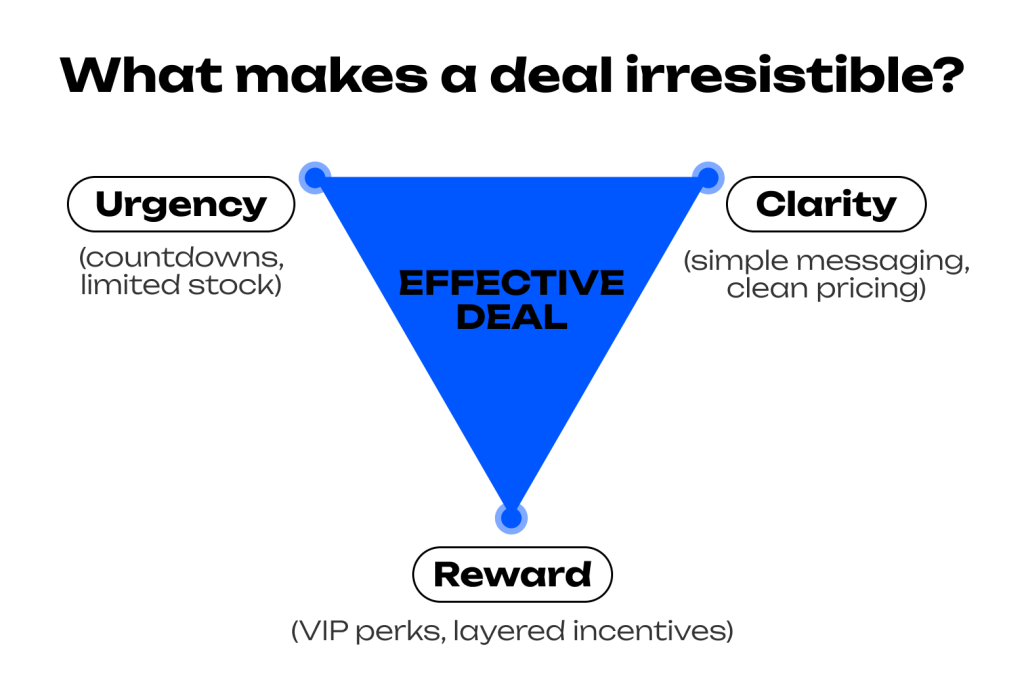
Creating irresistible Black Friday deals is an art. Deals should do more than grab attention; they should stop the scroll, spark urgency, and make your audience feel like they’re getting the best offer of the year. The secret lies in combining smart pricing, compelling visuals, and time-sensitive triggers that make shoppers act fast instead of hesitating.
Today’s consumer expects excitement. They want clear value, early access perks, and deals that feel too good to pass up. With strategic planning and layered incentives, your Black Friday campaign can deliver all three while driving massive conversions. This is also where merchants rely heavily on accurate operational insights, especially if they use buffer inventory to avoid selling out too early.
What Makes a Deal Irresistible?
At the heart of every successful Black Friday campaign is urgency, but urgency doesn’t have to be pushy. Limited-time or tiered discounts, countdown banners, or “only 12 left” stock alerts give customers a clear reason to buy right now. When paired with strong visuals and branded messaging, these signals create a smooth, motivating path to purchase.
Your email strategy plays a crucial role as well. A strong Black Friday sequence typically includes:
- Early-bird teasers (“Something big is coming…”)
- VIP first access
- Launch announcement
- Reminders during peak hours
- Last-chance warnings
This rhythm ensures your brand remains top of mind across the entire sales window.
Deep Discounts and Flash Sales
Based on past purchase history, flash sales and aggressive discounts remain the cornerstone of Black Friday. When executed with precision, they become powerful urgency boosters that significantly increase conversions.
Why these deals perform so well?
- They trigger FOMO: Black Friday shoppers don’t want to miss a once-a-year offer.
- They accelerate decision-making: Short timed windows reduce browsing and increase Black Friday purchases.
- They reward action-takers: Shoppers feel clever for acting quickly.
For example, Charlotte Bio boosted sales by 17% in just six hours using a well-timed flash sale paired with a prominent countdown and a simple discount code. This illustrates how clarity + urgency = high-impact results.
Winning formats to consider:
- 3-hour or 6-hour flash sales
- Tiered discounts (e.g., “Buy 2, get 20% off – Buy 4, get 40% off”)
- Midnight drops
- Time-based bundles (e.g., “The first 100 customers get…”)
Offering first access to flash deals and Black Friday promotions through SMS or email can also attract high-value customers who love being first in line. Applying urgency alongside accurate order routing reduces mistakes, especially for brands using split shipments to deliver items from multiple locations.
Exclusive VIP Offers
Rewarding your loyal customers with exclusive VIP customers offers can significantly enhance their engagement with your brand. This makes loyal customers feel appreciated and gives them a sense of special treatment, increasing loyalty and engagement.
Offering unique deals to loyal customers can lead to higher retention rates and increased spending during Black Friday. Examples of such deals include:
- Early-access shopping windows (12–48 hours before the public)
- Extra discounts on top of sitewide deals
- Free gifts with purchase (limited-edition or seasonal items perform well)
- VIP-only bundles or products
- Exclusive codes sent via SMS
A great example of when retailers offer significant discounts is TANIT Botanics, which invites VIP customers to shop early using personalized email links. This not only boosts loyalty but ensures that top customers get the first pick of the year’s best offers.
By implementing early bird access through email invitations, many online retailers ensure their most loyal customers get the first pick of their best deals and take advantage of a Black Friday deal. Additionally, consider exploring some Black Friday Cyber Monday marketing ideas to enhance your strategy.
Optimizing Your Online Store for Black Friday

Optimizing your ecommerce store for Black Friday is crucial for maximizing profits and enhancing customer satisfaction. Early preparation is key, as consumers often begin their search for holiday bargains in September. Creating a dedicated Black Friday landing page can help prominently display top deals and entice visitors. Testing your online store’s speed and fixing broken links is essential to ensure a seamless shopping experience during Black Friday.
Using analytics tools to gain insights into user behavior and traffic patterns can aid in better preparation. Ensuring a user-friendly interface and streamlined payment process is essential for a smooth shopper experience on Black Friday Cyber Monday. Additionally, monitoring inventory management levels to prevent stockouts and manage stock control is critical.
Mobile Optimization
Mobile optimization is more important than ever. With mobile devices accounting for a substantial portion of ecommerce traffic, ensuring your site is mobile-responsive is essential. To enhance user engagement on your Black Friday landing page, include:
- Clear messaging
- Highlighted deals
- Easy navigation
- Effective call-to-action buttons
Tailoring website navigation for a smooth mobile shopping experience ensures a smooth user experience. Poor navigation can lead to frustration and lost Black Friday sales, so using eye-tracking heatmaps to identify and fix problem areas can be very beneficial. A smooth, user-friendly interface can mean the difference between securing a sale and losing a potential customer to a competitor.
Remember, a key risk for ecommerce sites that are not optimized for mobile is losing customers to competitors.
Streamlining Checkout Processes
A streamlined checkout process is crucial for reducing cart abandonment. Implementing a one-page checkout can significantly simplify the purchasing process. Hiding the discount code field during checkout can prevent users from leaving the site in search of better deals elsewhere. The checkout flow is also an ideal place to highlight flexible payment options like BNPL and add transparent shipping information, particularly when supported by last mile delivery tracking during peak season.
Allowing guest checkouts and minimizing checkout steps are critical strategies to reduce cart abandonment. Creating an exit popup with a discount or reminder about unfinished shopping can effectively reduce cart abandonment amongst online shoppers.
Key Features of a Streamlined Checkout
A few of the main characteristics of a streamlined checkout process include:
- Reducing steps
- Allowing guest checkouts
- Providing a progress indicator.
Effective Black Friday Marketing Strategies
This is the heart of your ecommerce success. Below are robust, actionable strategies that can be applied across every type of ecommerce business.
1. Email Marketing Campaigns
Email marketing is a powerful tool for creative Black Friday campaigns. Key strategies include:
- Starting to build your email list in mid-October for an effective campaign.
- Personalization, which relies on clean data and defined customer segments.
- Sending Early Bird Access emails to provide VIP access to subscribers.
- Targeting the offer to those who engage with your emails.
Last Chance Emails serve to send final reminders for Black Friday deals. Including Black Friday discounts in abandoned cart recovery emails can help recover lost sales.
Promoting loyalty rewards in customers’ carts and allowing one-click redemption at checkout enhances engagement.
2. Omnichannel Black Friday Campaigns
Consumers don’t shop in one place; they bounce between apps, emails, and social channels before buying. An omnichannel setup ensures your message stays consistent, recognizable, and trustworthy.
Your omnichannel stack should include:
- Email flows & campaigns
- SMS reminders
- TikTok + Instagram Reels
- Google Search + Performance Max ads
- Website banners & top-bar countdown
- Push notifications
- Facebook/IG retargeting
Why it works? Consistency → Familiarity → Trust → Conversions.
Pro Tip: Map messaging across all channels so it feels unified, not duplicated. For example:
- Email: “VIP early access starts now”
- Instagram Story: Teaser visuals of top deals
- SMS: “Your early access link is live for 2 hrs”
3. Leveraging Social Media Platforms
Social media is a powerful tool for creating buzz and anticipation ahead of Black Friday sales. Using popular hashtags like #BlackFriday can enhance the visibility of your posts. Increased visibility on social media translates to greater traffic to ecommerce websites during the holiday online shopping season.
Crucial strategies include leveraging user-generated content and engaging with your audience through interactive posts and stories. This not only boosts online sales but also attracts customers by creating a sense of community and excitement around your brand.
4. Run Retargeting Ads
Retargeting is essential because 70–90% of visitors won’t purchase on their first visit.
People you should retarget:
- Product viewers (last 30 days)
- Abandoned carts
- Engaged social audiences
- Past customers (hyper profitable)
- Email subscribers who didn’t click
Possible Retargeting Ads Format
| Segment | Best Ad Type | Example |
|---|---|---|
| Abandoned cart | Dynamic product ads | “Still thinking about this?” |
| Product viewers | Testimonials | “Why 25,000 customers chose this” |
| Past buyers | Bundle offers | “VIP price unlocked” |
5. Offer Buy Now, Pay Later (BNPL) Options
Budget-conscious shoppers respond incredibly well to Buy Now, Pay Later, and showcasing it prominently on product pages and checkout can reduce friction. Payment flexibility becomes part of your value proposition, especially for higher-priced items or gifts. It’s not unusual for BNPL to increase conversion rates by 20–30% during the holiday rush.
6. Use Influencers & Affiliates
Influencers amplify reach just before the online sales peak.
A few ways to activate them efficiently:
- Unique discount codes
- “Top Picks” videos
- Unboxing of Black Friday bundles
- Story sequences with a countdown
- Affiliate blog posts (SEO boost)
Why affiliates work? They keep driving traffic long after the sale ends. Their audiences trust them, so their recommendations become social proof at scale
7. Add Trust Elements to Product Pages
Speaking of trust, your product detail pages must highlight it. This is where customers pause and decide. Adding reviews, video testimonials, shipping expectations, and return policy clarity can eliminate hesitation. Nearly one in five shoppers now say reviews directly influence their Black Friday decisions, so showcasing recent, relevant feedback genuinely matters.
Trust elements that increase conversion:
- Review carousel
- “Verified buyer” badges
- Shipping times
- Clear return policy
- Video testimonials
- “Guaranteed delivery before Christmas”
Pro Tip: 17% of shoppers say reviews determine their purchase.
8. Use Gamification to Boost Engagement

Make your store fun to shop – that way, customers stay longer and spend more. Gamified promotions bring a sense of play into the experience. Spin-the-wheel discounts, digital scratch cards, or hidden “mystery offers” can increase time spent on your site. These tactics break up the monotony of scrolling through standard product lists and give shoppers a moment of delight – the feeling of winning something.
9. Customer Feedback and Support
Enhancing the customer experience is essential during Black Friday, when questions, returns, and support requests spike. Fast, accessible support – whether through live chat, AI-powered assistants, or a temporarily expanded customer service team – prevents abandoned carts and builds trust. Clear communication around shipping times, returns, and product details also reduces uncertainty and cuts down on inbound inquiries. Preparing your customer support team with up-to-date scripts and FAQs can enhance their efficiency during Black Friday.
At the same time, frictionless post-purchase processes matter just as much. Simple, transparent return policies and streamlined tools (like automated returns portals) give shoppers confidence to buy without hesitation. Combined with proactive communication and quick issue resolution, these small improvements significantly boost satisfaction and increase the likelihood of repeat orders.
10. Cross-Sell and Upsell Strategically
Black Friday traffic is expensive and hard-earned, so each visit should stretch as far as possible. Smart cross-sells (like “Pairs well with…” or “Add travel size for £4.99”) help customers build a more complete order.
Upsells, on the other hand, offer premium versions, bundles, or add-ons.
Examples of upsells:
- Extended warranty
- Travel-size version
- Premium upgrade
- Gift wrap
Done subtly (especially at checkout), they lift the average order value without interrupting conversion flow.
Utilizing Technology to Boost Sales
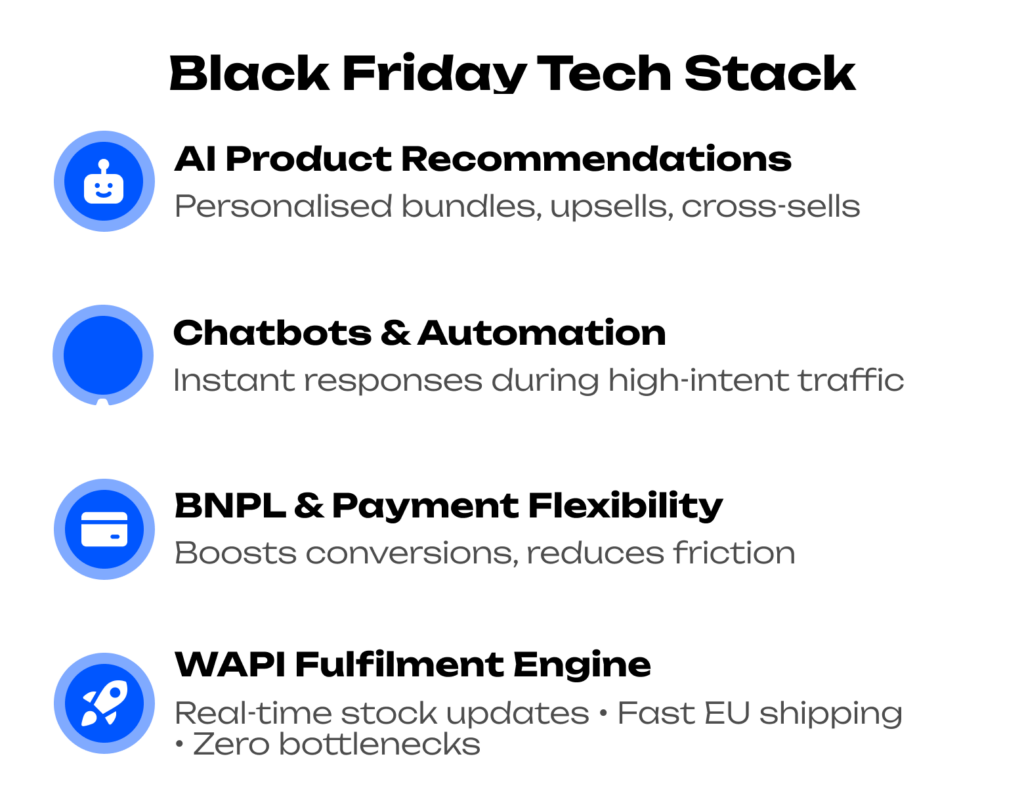
Technology now sits at the center of every successful Black Friday campaign launch. Smart tools, from AI recommendation engines to automated support, help ecommerce brands personalize the shopping journey, reduce friction, and convert more visitors during peak traffic.
AI-powered recommendations are especially valuable: by suggesting relevant items, bundles, and “frequently bought together” products, brands can lift conversions and average order value without adding complexity. Similarly, instant-response chatbots take pressure off customer support, ensuring shoppers get answers in seconds, not minutes – a key factor during high-intent shopping season spikes. Using AI-driven product recommendations can enhance the shopping experience and increase average order value during Black Friday.
And when it comes to handling the operational pressure behind the scenes, WAPI’s fulfillment tech keeps everything running smoothly – from automated inventory syncing to real-time stock visibility and high-speed processing. For brands selling in Europe or expanding their catalog (such as those starting to sell supplements), stability in operations is a competitive advantage during Black Friday.
Post-Black Friday Strategies
Maintaining momentum after Black Friday is crucial for maximizing holiday season sales and sustaining market engagement. Existing customers and repeat customers contribute 44% of total revenue, making them essential for continued sales. Integrating repeat customer strategies into your post-Black Friday plan can enhance customer loyalty and increase overall profitability.
Analyze performance using your ecommerce metrics and KPIs and continue personalized communication based on behaviour gathered during the sale. Encouraging repeat business through targeted promotions and new customers product launches is a proven strategy. Thursday Boots successfully encourages repeat business by selling new product launches exclusively on their site.
Post-Black Friday ecommerce strategy should include retargeting campaigns and loyalty programs to keep the sales momentum going.
Retargeting Campaigns
Retargeting ads can significantly improve sales by reminding customers of products they viewed but didn’t purchase. Brands that implement retargeting ads often see a higher return on ad spend compared to standard advertising approaches, with improved return on ad spend by 2x and lowered cost per purchase by 3.6x.
Using targeted promo offers is an effective strategy to convert returning visitors during Black Friday. Retargeting campaigns can significantly enhance conversion rates by reconnecting with potential customers who have previously interacted with the brand.
Customer Loyalty Programs
Such programs:
- Incentivize repeat purchases and deepen brand loyalty connection.
- Encourage customers to return for future purchases by offering incentives like discounts for repeat buying.
- Offer exclusive deals that can effectively increase customer retention and stimulate another purchase through a loyalty program.
A recommended strategy for maximizing loyalty during Black Friday includes:
- Offering exclusive member deals
- Providing double or triple loyalty points for purchases made during Black Friday weekend
- Integrating customer feedback into loyalty programs to tailor rewards more effectively, enhancing customer satisfaction.
Preparing for High Traffic and Technical Issues
High-traffic events can lead to significant challenges such as website overload and poor user experience. If your ecommerce platform is not reliable during Black Friday, there is a potential loss or gain of millions in sales. Cloud services enable automatic scaling of resources, which is crucial for managing traffic surges effectively.
Reliable infrastructure for handling website traffic surges can be provided by platforms like Shopify, which has managed over 1.19 trillion requests. Implementing virtual waiting rooms can help prevent site overload by putting users in a queue during peak times.
Before implementing new apps and themes on your live ecommerce site, you should test on a backup or staging development store first.
Load Testing and Autoscaling
Conducting load testing can help identify potential bottlenecks in the infrastructure before high-traffic events. One critical step tech teams should take to prepare for Black Friday traffic is to conduct load testing to ensure the technical setup can handle the massive influx of traffic. Autoscaling automatically adjusts resources to meet traffic demands, preventing downtime during sudden surges.
Implementing autoscaling can significantly enhance an ecommerce platform’s ability to maintain service reliability during peak shopping periods. By preparing in advance, you can ensure a seamless shopping experience for your customers.
Real-Time Monitoring
Real-time monitoring allows for proactive responses to system performance issues, errors, and response times. Shopify’s Status page can help determine if an issue is isolated or systemwide. Custom dashboards assist in tracking key performance indicators in real-time during high-traffic events.
Engineers perform 24/7 monitoring and provide updates to ensure quick resolution of technical issues. This proactive approach helps maintain a smooth and reliable shopping experience for customers during Black Friday.
Conclusion
Black Friday is an unparalleled opportunity for businesses to increase sales and build lasting customer relationships. By understanding the Black Friday ecommerce landscape, crafting irresistible deals, optimizing your online store, and implementing effective Black Friday marketing strategy, you can set your business up for success. Enhancing the customer experience and leveraging technology will further elevate your Black Friday performance.
Remember, preparation and precision are key. By following these top Black Friday ecommerce strategies, you can create a seamless and engaging shopping experience that not only attracts new customers but also retains existing ones. As the holiday season unfolds, these strategies will help you achieve a successful and profitable Black Friday.
Frequently Asked Questions
Why is Black Friday important for ecommerce businesses?
Black Friday is crucial for businesses as it presents a prime chance to significantly increase sales and draw in new customers to an ecommerce store. Seize this opportunity to offer exclusive deals and make the shopping experience unforgettable!
What are some effective marketing strategies for Black Friday?
Start your email and social media campaigns early to build excitement, use urgency and exclusivity to drive Black Friday sales, and personalize the shopping experience with AI. Embrace these strategies to maximize your impact this season!
How can I prepare my online store for Black Friday?
To successfully prepare your online store for Black Friday, audit your website for functionality, streamline the checkout process, and ensure your inventory is accurate. With these steps, you can confidently handle the influx of shoppers and maximize your sales!
 Community